A Tongue Without a Flag: The Quiet Battle to Keep Lepcha Alive in the Digital Age
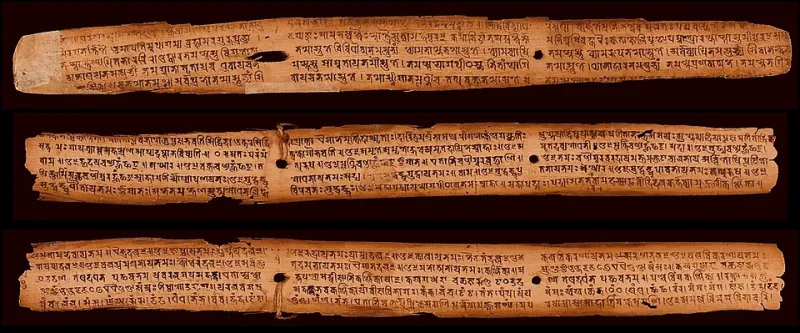
Photo: Ms Sarah Welch, CC BY-SA 4.0, via Wikimedia Commons
There are roughly 7,000 languages spoken on Earth right now, and by most scholarly estimates, half of them will not survive the century. When linguists describe this attrition, they tend to reach for biological metaphors: extinction, endangered species, last speakers. But there is a political dimension to language death that these metaphors obscure. Languages do not simply fade. They are displaced — by schools, by markets, by states that decide, explicitly or implicitly, which voices count.
The Lepcha language occupies a singular position in this story. Spoken by an Indigenous people of Sikkim, the Darjeeling hills, and parts of eastern Nepal and Bhutan, Lepcha belongs to a community that has never held sovereign territory in the modern sense. There is no Lepcha nation to print its currency, stamp its passports, or mandate its instruction. And yet the language has persisted — carried by monasteries, family kitchens, and, more recently, by a small network of developers and educators building digital tools for a tongue that predates most of the world's writing systems.
A Script Written for the Mountains
Lepcha is not merely spoken; it is inscribed in a script of remarkable pedigree. Tradition attributes its creation to the nineteenth-century scholar Thikúng Men Salóng, who is said to have designed the letterforms from the shapes of the mountains themselves — peaks, ridgelines, the sweep of the Himalayan horizon. Whether or not one accepts the legend literally, the point stands: this is a writing system rooted in a specific landscape, one of the oldest indigenous scripts in the region.
That heritage makes the current moment precarious. Lepcha holds a measure of official recognition in Sikkim, where it appears on state documents, and it is taught in some schools. But recognition on paper is not the same as transmission at home. Census data and community surveys alike point to a familiar pattern: elders speak it fluently, middle generations understand more than they produce, and children — especially those in urban centers or English-medium schools — often know only fragments.
The American Mirror
For readers in the United States, this trajectory should feel uncomfortably familiar. The English-only movement, which has surfaced repeatedly in state legislatures and national politics for decades, rests on the assumption that a single shared language is a prerequisite for national cohesion. But the historical record suggests the costs of that policy fall on the very communities whose languages are erased. Native American boarding schools, where children were punished for speaking their mother tongues, produced linguistic wounds that communities are still working to heal — often through the same tools now being deployed in the Himalaya.
The parallel is instructive. When a language disappears, we do not merely lose a communication system. We lose the ecological knowledge encoded in its vocabulary, the oral histories structured by its grammar, the ways of describing snow, rivers, kinship, and grief that have no tidy equivalent elsewhere. A language is a repository of tested human experience. Deleting one is not streamlining; it is a library fire.
Monks, Code, and the Long Game
What distinguishes the current Lepcha revival is its method. In monasteries and community centers, monks continue to teach the script as they have for generations. But alongside them, a younger cohort is working in a different register: Unicode proposals, mobile keyboard apps, digitized manuscripts, and online dictionaries that let a teenager in Gangtok — or a curious descendant in Queens — type in a script their great-grandparents kept alive by hand.
This fusion of traditional authority and open-source infrastructure may be the most transferable lesson for an American audience. Language revitalization in the US, from Cherokee immersion schools to Wampanoag language reclamation, has followed a similar arc: the community holds the knowledge, the technology removes the bottleneck. The two are not rivals. The monastery supplies the continuity; the app supplies the reach.
What Is Actually at Stake
It is tempting to frame language preservation as a sentimental cause, a matter of heritage in the museum sense. But the Lepcha case argues for something more practical. A people without a nation has, in its language, the one institution that cannot be annexed. Every child who learns the script of the mountains inherits a legal and spiritual claim that no border commission can adjudicate.
For a country currently debating which languages belong in its classrooms and on its ballots, that is worth sitting with. English will not disappear from American life no matter how many other languages flourish beside it. The question is whether we treat linguistic diversity as a threat to manage or a resource to steward. The Himalaya — where a script shaped like a ridgeline is being uploaded one keystroke at a time — suggests the second path is not only possible, but already underway.