Before Music Was Something We Bought: The Living Songways of the Lepcha

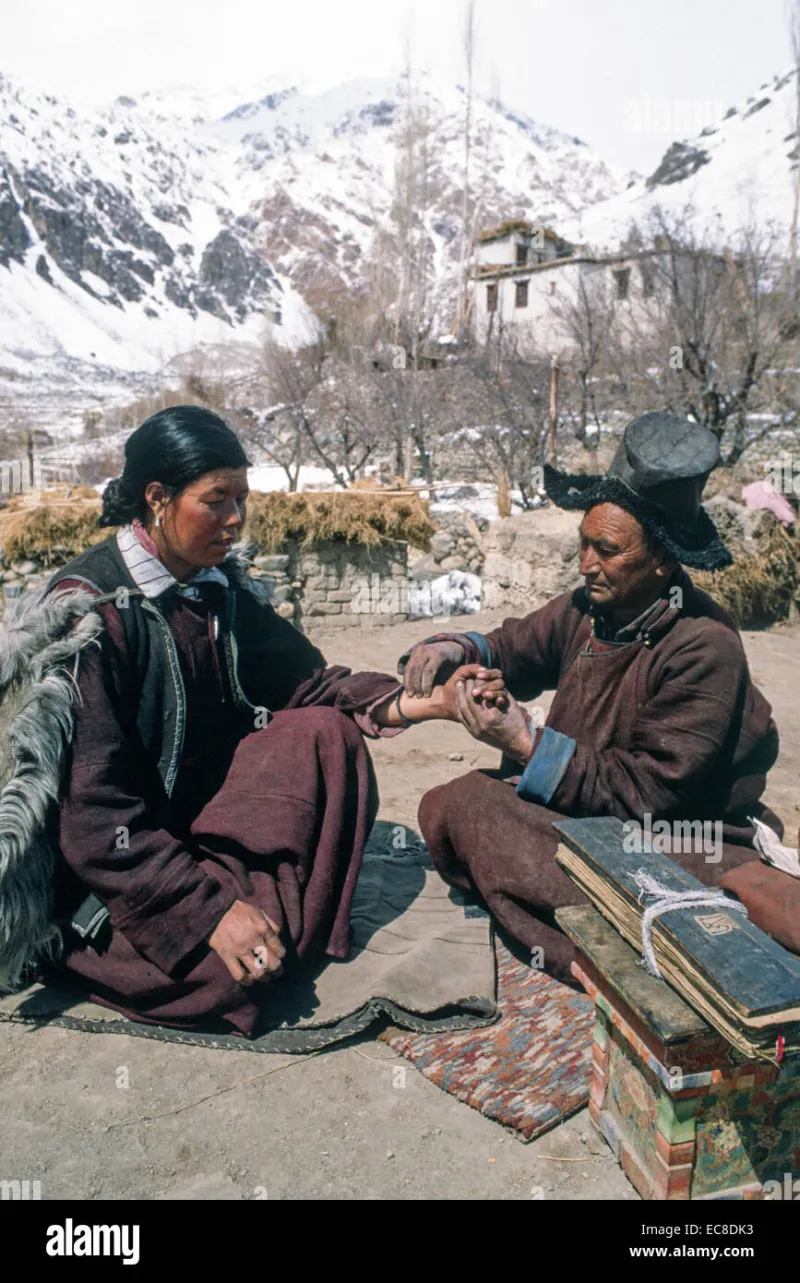
Photo: Himalayan village grandmother singing child traditional lullaby, via c8.alamy.com
Somewhere in the hills of Sikkim and Darjeeling tonight, a grandmother is singing a child to sleep in a language that predates most of the world's writing systems. The lullaby is not performed. It is not recorded. It will not trend. And yet, by the time the child drifts off, something has been transmitted that no streaming service can deliver: language, memory, and belonging, folded into melody.
Song as a Verb, Not a Product
Linguists who study Lepcha — a Tibeto-Burman language with its own ancient script — have long noted that its musical traditions resist the categories Western musicology likes to use. There is no sharp line between "song" and "speech," between performer and audience, between art and utility. Work songs coordinate the rhythm of shared labor; harvest songs mark the agricultural calendar; lullabies carry vocabulary and place-names from one generation to the next.
The functional reading is tempting: songs organized labor, so people sang while working. But the deeper truth runs the other direction. In Lepcha communities, singing was never separated from living. It was a mode of communication, closer to how we might think of conversation than of concert. To ask "what is the song for?" would have seemed as strange as asking what a sentence is for.
What the American Model Gained — and What It Lost
The United States built the most sophisticated music-delivery system in human history. A teenager in Ohio can access more recorded sound in a week than a Himalayan village might have produced in a century. This is a genuine achievement. But the model carries a hidden cost: it positions nearly everyone as a listener rather than a singer.
Ethnomusicologists sometimes call this the "concert hall transformation" — the shift from participatory music-making to consumption of professional performance. Sociologists of religion have documented a parallel decline in congregational singing. The result is a culture saturated with music yet oddly silent in its kitchens, fields, and bedtime routines.
The Revival That Keeps Happening
It is telling that Americans keep reinventing what the Lepcha never abandoned. The vinyl revival, for all its collector-culture quirks, reflects a hunger for music as a physical, situated practice rather than a weightless stream. The explosion of community choirs — from Brooklyn to Portland — suggests the same. Adult recreational sports leagues work because people miss doing things together; community choirs are the same instinct aimed at the voice.
Researchers studying group singing have found that synchronized vocalizing reliably increases social bonding and lowers stress markers. Lepcha work songs, which align the movements of many hands to a single rhythm, encode this knowledge without needing the clinical vocabulary. The song is the coordination; the coordination is the song.
What a Lullaby Actually Transmits
Consider what happens inside a Lepcha lullaby. The child hears the phonetic inventory of the language — its tones, its clusters, its particular music — before being able to speak a word. The child absorbs references to mountains, rivers, and ancestors. The caregiver, in turn, practices the inherited repertoire, keeping phrases alive that might otherwise vanish. A lullaby is thus a classroom, an archive, and an act of love simultaneously.
Now consider the modern American alternative: a curated playlist on a smart speaker, chosen from a catalog designed by recommendation algorithms. The child still hears music. But the transmission chain — the human hand passing human material to a human child — is interrupted.
Learning to Sing Again
None of this requires romanticizing Himalayan village life or pretending American families should adopt Lepcha songs wholesale. It requires something simpler and harder: treating singing as a normal human activity rather than a professional one. Sing badly at bedtime. Sing while doing dishes. Learn one song from your grandmother and teach it to someone.
The Lepcha tradition suggests that music's original purpose was never to be admired from a distance. It was to bind labor to rhythm, seasons to memory, and children to the people who love them. That purpose is still available — for the price of opening one's mouth.