Words the Dictionary Never Caught: Five Lepcha Terms That Say What English Can't

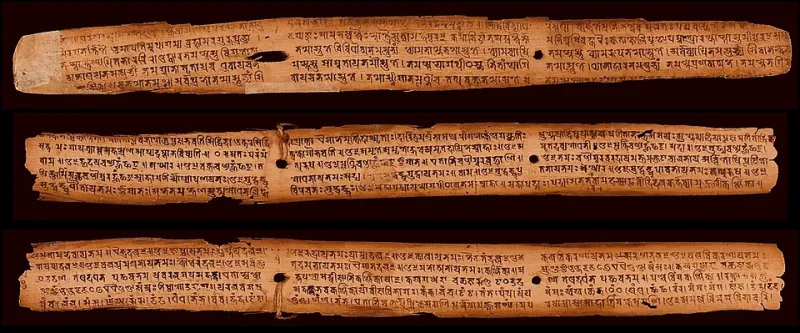
Photo: ancient Lepcha script manuscript Himalayan language, via d1fd34dzzl09j.cloudfront.net
The internet loves a good untranslatable word. Danish hygge sold a thousand candles; Portuguese saudade launched a thousand think pieces. These lists are pleasant, but they usually stop at the level of novelty—foreign words as linguistic souvenirs.
The Lepcha language, spoken in Sikkim, Darjeeling, and parts of Nepal and Bhutan, offers something richer. Lepcha is a Tibeto-Burman language with its own ancient script, a deep literary tradition, and—crucially—a vocabulary forged by life on Himalayan slopes, where ecology, kinship, and spirit are not separate domains. The five terms below are not curiosities. Each one points to a practice, a relationship, or a perception that English speakers must spend a whole sentence approximating.
1. Rum — Not 'God,' but the Sacred Everywhere
Translators often render rum as 'god' or 'spirit,' and both translations lose the point. In Lepcha usage, rum pervades the landscape: it inheres in Kanchenjunga's peak, in mountain springs, in ancient trees, in birds. English splits the world into 'natural' and 'sacred' and needs a paragraph to glue it back together. Rum never made the split. For a culture that treats a spring as a being with claims on human behavior, one word does the work of an entire theology.
2. Cho — The Mountain That Outranks You
The great peaks of the Lepcha world—above all Kangchenjunga, which Lepcha tradition holds to be the resting place of the first humans—are addressed with a respect grammar that English simply lacks. Mountains are not scenery or resources; they are elders, ancestors, presences whose names are spoken with care. Where English has 'mountain' and lets context do the rest, Lepcha vocabulary encodes a standing relationship: you live below something that was here first and will be here after. Americans discovered a version of this idea only when courts began granting legal personhood to ecosystems—the Lepcha never needed a courtroom to make the argument.
3. Namsung — The Sky as a Shared Inheritance
Lepcha star lore is among the richest in the Himalaya, and the language treats the night sky not as empty backdrop but as a domain of story, season, and belonging—a shared inheritance read overhead. English speakers who want this idea must borrow phrases like 'celestial heritage,' which sound like they belong in a grant application. In Lepcha, the sky's narrative texture is built into ordinary reference: the heavens are where the community's oldest stories remain on permanent display.
4. The Grammar of Witnessing
Lepcha social life places extraordinary weight on the person who is present—truly present—for the significant moments of another's life. English flattens this into 'witness,' a word now so legalistic that it evokes subpoenas more than intimacy. The Lepcha concept names a moral role: to be known is to be seen by one's community, and to see others in their defining moments is an obligation, not an option. In a country where loneliness is now classified as a public health concern, a language that grammaticalizes deep presence reads less like trivia and more like a missing tool.
5. Naming as Relationship, Not Label
In Lepcha practice, personal identity is not fixed at birth like a serial number. Names, roles, and standing shift across a life, responsive to deeds, relationships, and community recognition. English treats a name as a fixed container—the thing on your driver's license. The Lepcha framing treats identity as something a community and an individual continuously negotiate. One language locks the self in a cage; the other leaves the door open.
Why This Is More Than a List
Every word above fails translation for the same underlying reason: Lepcha assumes that people, landscape, and community are continuous with one another, while English assumes they are separate. Linguists call this the Sapir-Whorf territory—the idea that language shapes habitual thought. Whatever one's position in that debate, the practical point stands: a vocabulary is a record of what a people refused to overlook.
The Lepcha refusal to overlook is instructive. They did not overlook the sacredness of water, the personhood of mountains, the obligation of presence, or the fluidity of self. English can describe all of these things. It just never needed to—until, perhaps, now.