It Takes a Slope, Not Just a Village: Rethinking the Nuclear Family Through Lepcha Child-Rearing
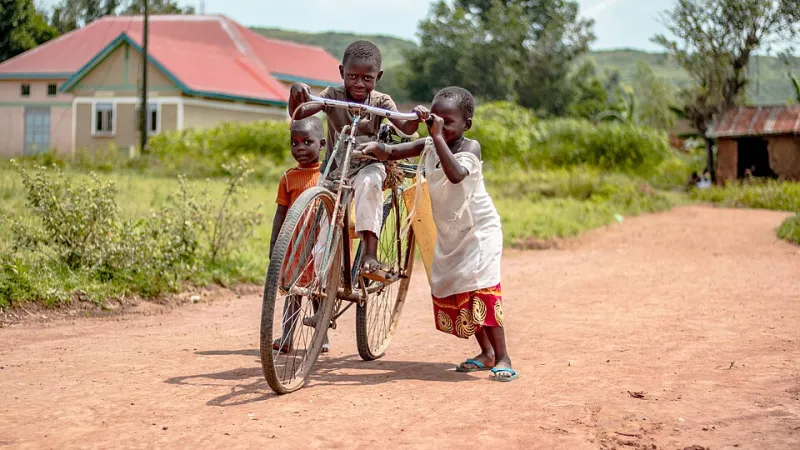
Photo: Tonny Mpagi, CC BY-SA 4.0, via Wikimedia Commons
Last month I added up what our family spends on childcare, enrichment classes, and the various apps that promise to make parenting manageable. The number made me laugh, in the way numbers sometimes do when they are absurd. Then I read about how Lepcha families in the Himalayas raise children, and I laughed again—differently.
The Lepcha, an Indigenous people of Sikkim, Darjeeling, and the eastern Himalayas, do not raise children in the configuration Americans treat as default. Childhood there is embedded in a web of households, elders, and work. A child is not a project managed by two adults; a child is a member of a community that expects—and delights in—their contribution.
The Economics of Doing It Alone
American parenting has become a two-person (often one-person) endurance sport. The market has noticed. The industry of parenting advice, monitored sleep, structured enrichment, and safety technology is enormous and growing, built on a simple premise: that parents should and can do this alone, with purchased support.
Lepcha communities run on a different premise. Children learn through contribution—helping with the harvest, carrying water, participating in the weaving and the cooking and the care of younger siblings. Work is not withheld from childhood until adulthood; it is the medium through which childhood becomes meaningful. And unstructured time in the mountain landscape is not a gap to be filled with programming. It is the curriculum.
None of this requires wealth. It requires proximity—many adults, sharing the load, sharing the watching.
What Contribution Teaches
The developmental logic is worth taking seriously. A child who is genuinely needed—who hauls, helps, and hauls again—develops competence and belonging in the same motion. American parenting culture tends to separate these: competence is purchased through classes; belonging is negotiated through family therapy. In Lepcha villages, both arrive together, daily, without invoices.
There is also the matter of parental sanity. When child-watching is distributed, no single parent carries the surveillance burden that American mothers in particular describe as all-consuming. Burnout is not a personal failure in a communal system; it is a design flaw the design itself prevents.
What We Can Borrow Without Relocating
Most American families cannot move to a Himalayan hillside. But the underlying principles travel:
- Widen the circle deliberately. Treat neighbors, grandparents, and chosen family as actual co-parents, not occasional babysitters. Ask for the watching, offer the watching.
- Let children be useful. Real chores with real stakes—not chore charts, but genuine contribution to the household's functioning.
- Protect the unstructured. Fewer activities, more wandering. The mountain does not need a lesson plan, and neither does the backyard.
I do not romanticize subsistence life, and Lepcha families face real pressures from modernization and migration. But standing in my kitchen, tired and $2,000 poorer this month, I find it hard to believe that the isolated nuclear family is the peak of human child-rearing. The Lepcha never thought so. Maybe the rest of us are finally ready to listen.