A Name Is Not a Cage: How the Lepcha Tradition of Shifting Identities Challenges Everything We Think We Know About the Self

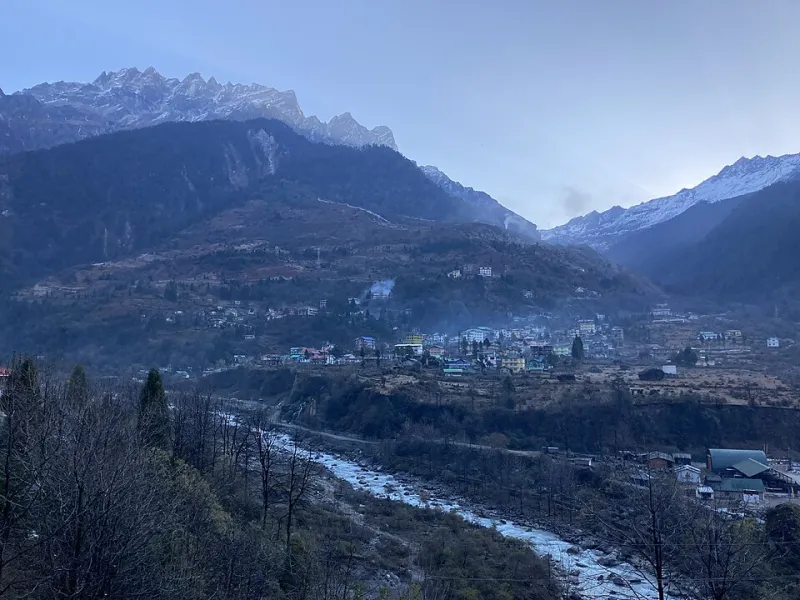
Photo: Vinayaraj, CC BY-SA 4.0, via Wikimedia Commons
In the United States, a name is treated as something close to a constitutional fact. It appears on birth certificates, Social Security cards, driver's licenses, and passports. To change it legally requires paperwork, court appearances, and fees. Even in informal life, the suggestion that someone might simply become a different person — and deserve a different name to mark that becoming — is often met with suspicion, as though authenticity demands consistency and consistency demands a single, stable label from cradle to grave.
The Lepcha people of the Sikkim Himalayan region hold a fundamentally different understanding. For them, a name is less a permanent designation than a living document — one that can and should be revised as a person moves through the major passages of existence. This is not a casual or arbitrary practice. It is a philosophy, embedded in language, ritual, and community, that treats identity as something earned, renewed, and sometimes surrendered rather than simply assigned.
The Name You Are Given and the Name You Grow Into
Lepcha naming begins, as it does in most cultures, at birth. A child receives a name that carries meaning — often drawn from nature, spiritual symbolism, or the circumstances of the birth itself. The Lepcha relationship with the natural world is intimate and precise, and birth names frequently reflect this, invoking mountains, rivers, plants, or celestial conditions observed at the time of the child's arrival.
But this initial name is understood as provisional in a way that Western birth names are not. It describes a beginning, not a destiny. As the child grows, additional names may accumulate — nicknames conferred by family, names given by a mun (a Lepcha shaman or ritual specialist) following a significant illness or spiritual event, and names that emerge from relationships with elders or through initiation into particular community roles.
Each of these names does not erase the one before it. Rather, they layer. A person may be known differently by different people depending on the context of their relationship and the phase of life in which they first became close. An elder might still use a childhood name. A ritual specialist might use a name conferred during a healing ceremony. A spouse might use an entirely different term of address. The same individual exists, simultaneously, under multiple linguistic identities — and this is considered entirely coherent.
Transition as Transformation
Among the most structurally significant naming events in Lepcha tradition are those tied to major life transitions. Marriage, for instance, is not merely a social arrangement but a threshold crossing that can involve a reconfiguration of identity for both parties. The names used before and after such a transition may shift to reflect the new relational and spiritual status each person occupies.
Death, too, occasions a kind of renaming — or rather, a careful management of the deceased's name, which may become subject to particular restrictions or ceremonial protocols. This practice reflects a broader Lepcha understanding that names carry spiritual weight and that speaking a name is never a neutral act. To name someone is to invoke them, to acknowledge their presence in the web of relationships that constitutes a community.
Perhaps most striking to outside observers is the practice of renaming following serious illness or a significant spiritual crisis. In such cases, a mun may determine that a person's existing name has become spiritually compromised — associated with misfortune or vulnerability — and prescribe a new name as part of the healing process. The logic here is not superstition but a coherent epistemology: if identity is relational and contextual, then a name that carries the wrong associations can be genuinely harmful, and replacing it is a practical intervention, not merely a symbolic one.
What Western Culture Gets Wrong About Permanence
The American insistence on nominal permanence is relatively recent in historical terms and far from universal even within Western traditions. Medieval Europeans routinely acquired new names upon entering religious life. Indigenous naming practices across the Americas have long included earned names and transition names. Even within contemporary US culture, the fluidity of names is more common than official systems acknowledge — nicknames, chosen names within LGBTQ+ communities, the informal adoption of new identities following immigration or religious conversion.
And yet the dominant cultural narrative persists: your name is your self, your self is fixed, and to change either is to be somehow less authentic, less trustworthy, less real.
The Lepcha framework suggests that this equation has things precisely backward. A name that never changes may indicate not authenticity but stagnation — a failure to honor the genuine transformations that a life, honestly lived, inevitably produces. To insist that the person you were at seven is identical to the person you are at forty-seven is not humility. It may, in fact, be a kind of denial.
Language as a Mirror of Philosophy
The Lepcha language itself encodes this fluidity in ways that go beyond naming. Lepcha employs distinct registers and forms of address that shift depending on the relative age, status, and relationship of speaker and subject. The language does not permit the fiction that all encounters are equivalent or that identity is context-free. Every utterance positions the speaker in relation to others, and those positions are understood to change.
This linguistic architecture means that Lepcha speakers are constantly, subtly reminded that the self is not a solitary object but a relational event. Who you are depends, in part, on who you are with — and the language makes this visible in every exchange.
For American readers accustomed to a cultural emphasis on the autonomous, self-determining individual, this may feel disorienting. But it is worth sitting with the discomfort long enough to ask what it reveals. The Lepcha understanding does not diminish the individual; it situates the individual within a larger, more dynamic story.
The Stories We Tell About Who We Are
In recent decades, American culture has become increasingly interested in the idea of personal reinvention — the second act, the pivot, the rebrand. Self-help culture, therapy culture, and social media culture all traffic in narratives of transformation. And yet the underlying assumption often remains that there is a single, true self that was always there, waiting to be uncovered or recovered. The journey is one of discovery, not creation.
Lepcha naming philosophy offers a subtly but importantly different model. Identity, in this view, is not discovered but made — collaboratively, ritually, and repeatedly across a lifetime. The names a person accumulates are not masks over a hidden truth. They are the truth, in sequence, as it unfolds.
This is not relativism. The Lepcha tradition is deeply structured, governed by ritual knowledge, community consensus, and spiritual discernment. Not just any name can be adopted on a whim. But within that structure, there is a profound acknowledgment that human beings are not finished products. They are processes.
For a culture as restless and change-oriented as American culture, and yet as paradoxically attached to fixed identity, this is a distinction worth examining carefully. The Lepcha do not fear that fluidity undermines the self. They understand fluidity as the condition that makes a genuine self possible at all.