Deliberate Time: How the Lepcha Practice of Strategic Patience Challenges America's Obsession with Speed
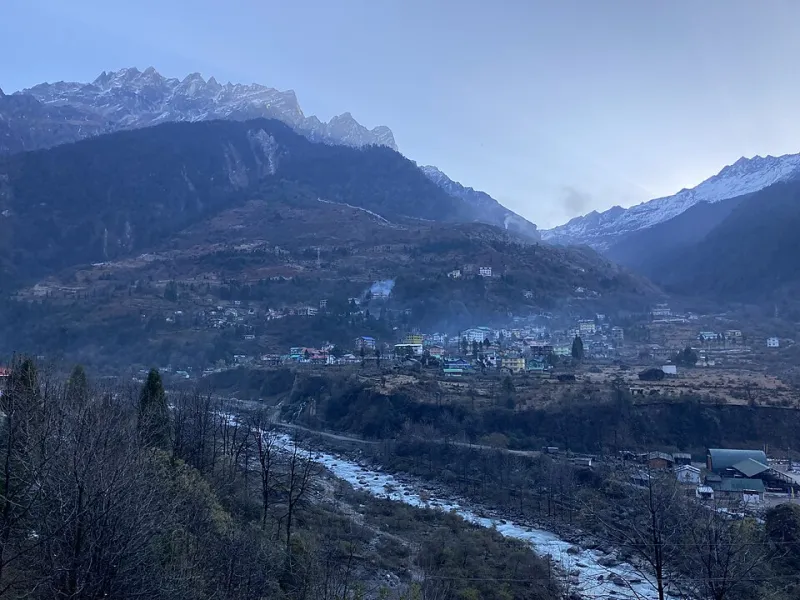
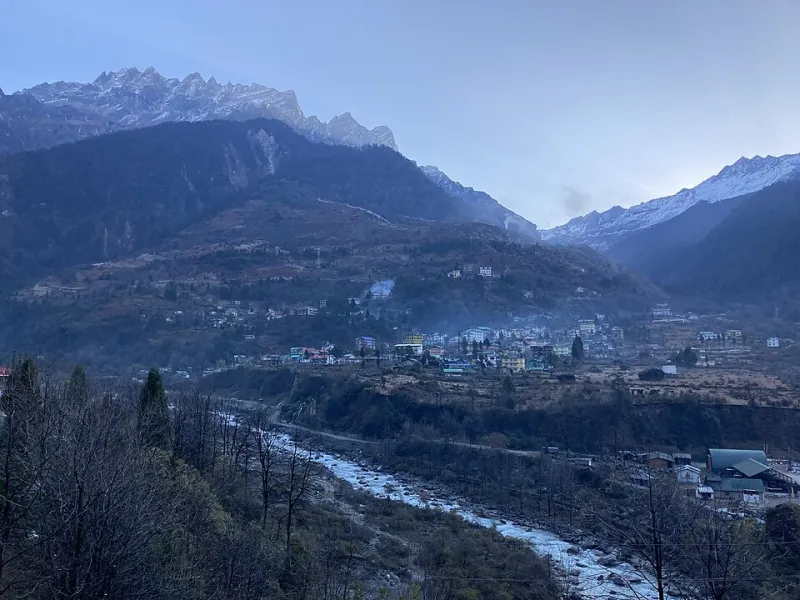
Photo: Mananjpatel1996, CC BY 4.0, via Wikimedia Commons
Somewhere between the relentless cadence of quarterly earnings reports and the algorithmic urgency of next-day delivery, the American imagination has come to equate speed with virtue. To move quickly is to succeed. To wait is to fall behind. This framework, so deeply embedded in contemporary life that it often goes unexamined, would be almost unrecognizable to the Lepcha people of the eastern Himalayas—a community for whom patience is neither a personality trait nor a coping mechanism, but a sophisticated, intentional practice woven into the very structure of daily existence.
Understanding why requires looking carefully at what the Lepcha mean when they orient their lives around unhurried deliberation—and recognizing that this is something categorically different from what most Americans picture when they hear the word "waiting."
Waiting as an Active State
In mainstream American culture, patience tends to be framed as the absence of action: you wait because you cannot yet move, and the moment movement becomes possible, waiting ends. Productivity culture has refined this instinct into an art form, filling every idle interval with podcasts, inbox management, or micro-tasks. The underlying assumption is that time spent not producing is time wasted.
The Lepcha framework inverts this logic entirely. Within Lepcha communities in Sikkim and the surrounding Himalayan region, the period before a major decision—whether it concerns a marriage alliance, the cultivation of a new field, the resolution of a community dispute, or the harvest of a particular medicinal plant—is understood as a time of active preparation. Elders observe, consult, and accumulate information across seasons. Younger community members learn by watching this process unfold. The interval is not empty; it is dense with attention.
This is what might be called strategic patience: a disciplined orientation toward time that treats the moment of action as something that must be earned through sustained observation rather than seized through force of will. The decision, when it finally arrives, carries the weight of everything that preceded it.
The Ecological Dimension
Perhaps nowhere is this philosophy more concretely visible than in the Lepcha relationship with the natural environment. Traditional Lepcha land stewardship has long operated on timescales that dwarf the planning horizons of most modern institutions. Decisions about which forest areas to leave undisturbed, when to allow a particular slope to regenerate, or how long to wait before returning to a harvested area are not made on the basis of immediate need alone. They are made in reference to cycles of ecological time that extend across generations.
This approach has practical consequences that are now attracting the attention of conservation researchers. Communities that have maintained traditional Lepcha stewardship practices in parts of Sikkim have preserved biodiversity corridors and watershed integrity in ways that more interventionist land management has sometimes failed to replicate. The patience embedded in the cultural framework turns out to have measurable environmental outcomes.
For an American audience accustomed to thinking about conservation in terms of policy interventions and technological solutions, this is a genuinely disorienting insight. The most effective environmental action, in this context, may sometimes be the disciplined decision not to act—at least not yet.
Patience and Conflict Resolution
The same temporal sensibility shapes how Lepcha communities have traditionally approached interpersonal and collective conflict. Rather than moving immediately toward confrontation or formal resolution, disputes are often allowed to breathe. Parties are given time to reflect. Mediators—typically respected elders with deep knowledge of community history and relationships—do not rush toward settlement. They wait for the moment when resolution will hold rather than simply contain.
This stands in striking contrast to the adversarial efficiency of the American legal system, which prizes speed and finality, often at the expense of genuine reconciliation. It also differs from the therapeutic culture of conflict resolution that has gained traction in corporate and educational settings, which tends to emphasize structured dialogue within defined timeframes. The Lepcha approach does not impose a schedule on the process of healing. The process determines its own schedule.
The results, according to accounts from within these communities, tend toward durability. Agreements reached through this slower process are agreements that the parties have had time to genuinely internalize—not compromises extracted under pressure, but understandings that have been allowed to mature.
What Optimization Costs
It is worth being direct about the challenge this philosophy poses to American readers, because the temptation to simply admire it from a comfortable distance is real. The Lepcha practice of strategic patience is not a productivity hack. It is not a mindfulness technique to be incorporated into a morning routine alongside cold plunges and journaling. It is a fundamentally different relationship with time—one that carries real costs in a world organized around speed.
To practice this kind of patience in contemporary American life would require pushing back against institutional structures that are explicitly designed to reward rapid action. It would mean tolerating the social discomfort of appearing slow or indecisive in professional environments that equate hesitation with weakness. It would mean accepting that some of the value generated by patient observation is invisible to metrics that only capture output.
These are not small asks. But the Lepcha example suggests that the costs of not practicing strategic patience may be equally significant, and considerably less visible: decisions made without adequate observation, conflicts resolved too quickly to hold, and landscapes harvested faster than they can recover.
A Different Measure of Progress
The Lepcha concept of deliberate time ultimately asks a question that American culture has largely stopped asking: What is the right moment for this? Not the convenient moment, not the profitable moment, not the moment that satisfies an external schedule—but the moment that the situation itself has prepared.
For communities that have navigated the complex ecological and social terrain of the eastern Himalayas across many generations, this question has never been abstract. It has been survival. The patience it demands is not the patience of resignation or passivity. It is the patience of a people who have learned, through long experience, that the mountain does not negotiate with urgency.
There is something in that knowledge worth sitting with—even if, especially if, sitting with it feels uncomfortable.