Before the Entrance Fee: What Kanchenjunga Exposes About the American Idea of Wilderness
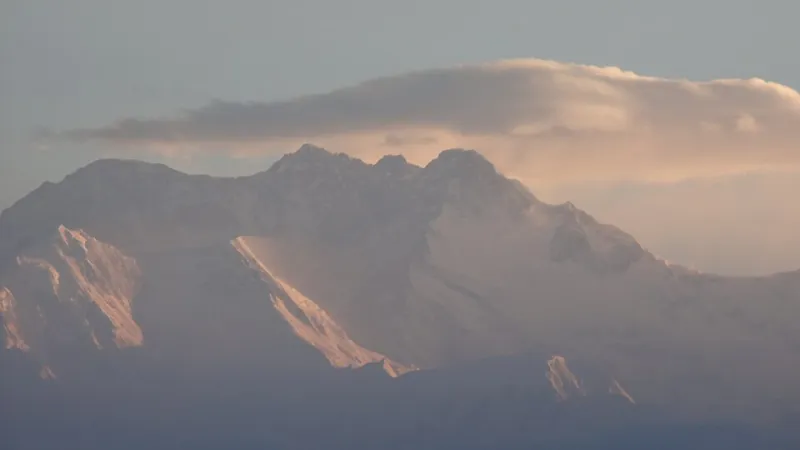
Photo: Kaksbhatt, CC BY-SA 4.0, via Wikimedia Commons
Yellowstone was founded on a paradox we rarely say out loud. The 1872 act that created the world's first national park described a "public park or pleasuring-ground" — language that tells you everything about the underlying assumption. Wilderness, in the American model, is a product. It is set aside, administered, and consumed, usually via automobile, annual pass, and a gift-shop magnet. The visitor pays at the gate; the land delivers an experience.
There is another way to stand on a mountain, and the Lepcha people have been demonstrating it for as long as there have been people beneath Kanchenjunga.
The Mountain That Is Also an Ancestor
Kanchenjunga — the world's third-highest peak, straddling the border between Nepal and the Indian state of Sikkim — is not, in Lepcha cosmology, a scenic asset. It is Kongchen Kongchlo, the guardian deity, the most sacred of the mountains that watch over the Lepcha world. The mountain is not a destination. It is a relative, an overseer, a presence whose slopes are off-limits to the climbing rope not because of a permit system but because of a moral one.
This is why, historically, Lepcha tradition held that the summit should not be trodden. When mountaineers eventually climbed Kanchenjunga in 1955, the British-led team famously stopped short of the top as a gesture of respect toward local belief — a small concession that nonetheless highlights how foreign the reverence was to the expedition's framing. The mountain was a trophy to be nearly attained; to the Lepcha, it was never a trophy at all.
The Playgrounds We Made
The American wilderness model — and its export via national park systems worldwide — has genuine achievements to its name. Millions of acres were spared from the saw and the plow. But the model carries assumptions worth interrogating. It presumes land is something a society has rather than something it is part of. It prices access, zones use, and manages wildlife as a resource inventory. It treats the human as, at best, a welcome visitor and, at worst, a problem to be fenced out.
Indigenous peoples were frequently the ones fenced out. The wilderness ideal, as environmental historians have documented, often required the removal of the very communities whose practices had sustained the landscape. Empty of people, the park became a stage set — beautiful, managed, and cosmologically shallow.
What Co-Management Could Look Like
The alternative is not the abolition of protected areas. It is a redistribution of authority. Around the world, a quiet experiment is underway: co-managed parks where Indigenous nations share governance with state agencies, where cosmology informs zoning, and where sacred sites receive protections that no fee schedule can express.
In the Kanchenjunga region itself, the Khangchendzonga National Park — a UNESCO World Heritage Site — was inscribed partly for its cultural significance, recognizing that the Lepcha sacred geography is inseparable from its biodiversity. That acknowledgment matters, but acknowledgment is not authority. The harder question is whether conservation agencies are willing to let a guardian-deity cosmology shape management decisions — which trails close, which species matter, what "sustainable" even means.
American public lands are already moving, haltingly, in this direction. Tribes in the Pacific Northwest co-manage fisheries. The National Park Service has begun formal consultations with tribal governments. Bears Ears National Monument exists, in part, because five tribal nations insisted that the landscape's meaning preceded its designation.
The Case for Humility
Here is the argument, plainly: the wilderness-as-playground model assumes that the highest relationship a society can have with land is recreation, and the highest protection a landscape can receive is legal. The Lepcha relationship with Kanchenjunga assumes something else entirely — that land can be kin, that protection can be devotional, and that a people can belong to a place more thoroughly than any deed records.
None of this requires Americans to adopt Himalayan theology. It requires only the humility to notice that the fence-and-fee model is one cosmology among many, and not obviously the wisest one. The mountain was watching long before we arrived with our entrance passes. It may be worth asking what it sees.