Earned Authority: How Lepcha Communities Teach Younger Generations to Question Wisely

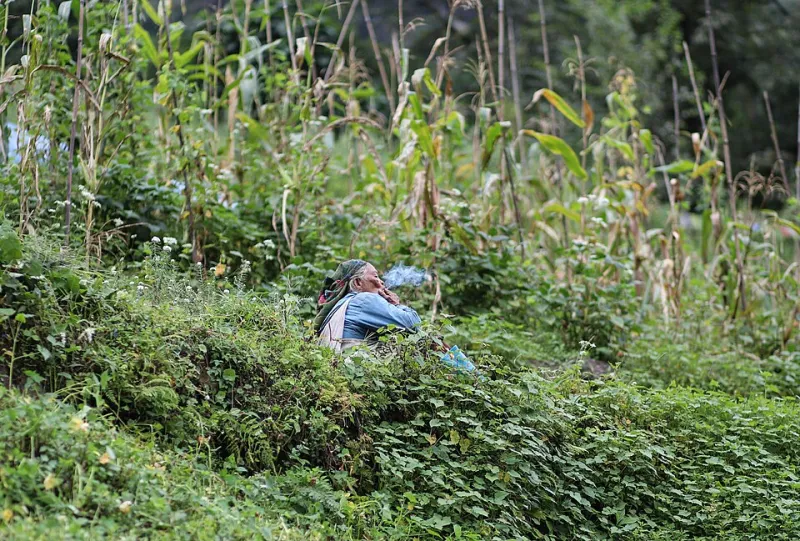
Photo: elderly Himalayan man and young person in conversation mountain village, via c8.alamy.com
American culture tends to treat authority and questioning as opposites. You either respect your elders or you challenge them. You either honor tradition or you move forward. The middle ground — the place where genuine dialogue between generations might actually happen — is rarely mapped with any precision. We lack the vocabulary for it, and perhaps more importantly, we lack the rituals.
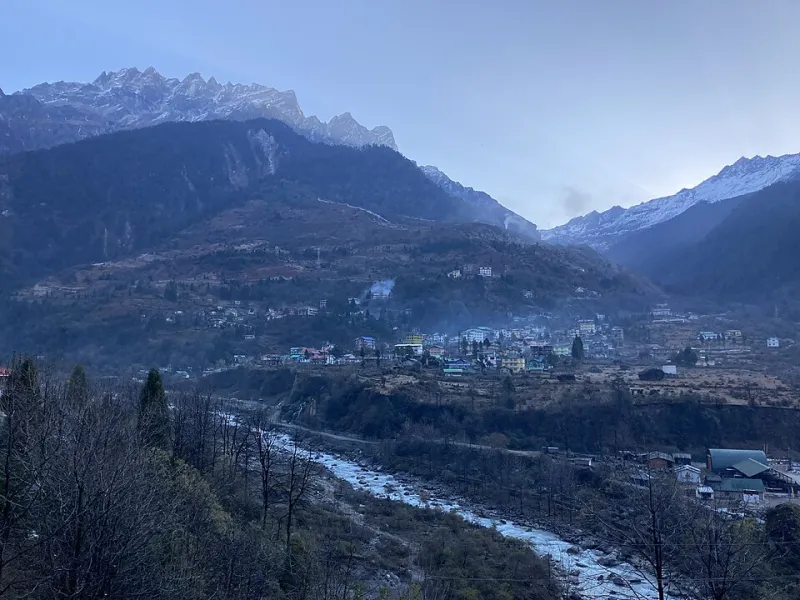
The Lepcha people of the Himalayan region, whose ancestral homeland spans present-day Sikkim, Darjeeling, and parts of Nepal and Bhutan, have spent centuries developing exactly that vocabulary. Within their communities, the authority of elders is not a fixed ceiling but a living inheritance — one that younger generations are expected to examine, test, and ultimately enrich. Understanding how this works requires looking carefully at the specific linguistic and social tools the Lepcha have built for the purpose.
The Problem With Two Bad Options
Before examining the Lepcha model, it is worth acknowledging why the question matters to readers in the United States. Many American families and institutions oscillate between two dysfunctional extremes. On one end sits rigid hierarchy: the elder speaks, the younger defers, and accumulated wisdom calcifies into dogma that cannot be updated or questioned without social cost. On the other end sits what might be called generational dismissal — the tendency, particularly pronounced in contemporary culture, to treat age itself as a disqualifying condition, as though experience produces only bias and never insight.
Both positions carry real costs. Rigid hierarchy prevents communities from correcting errors and adapting to new circumstances. Generational dismissal severs the transmission of knowledge that took lifetimes to accumulate. The Lepcha tradition suggests that both failures stem from the same root misunderstanding: the conflation of respect with agreement.
Respect as a Platform, Not a Silence
In Lepcha linguistic culture, the registers of speech used when addressing elders are not merely markers of politeness — they are structural features of how knowledge claims are framed. When a younger person raises a point that diverges from an elder's understanding, the phrasing does not position the speaker as a challenger but as a learner seeking clarification. The form of the question itself signals that the elder's perspective is being taken seriously enough to engage with deeply.
This is a subtle but consequential distinction. In many Western conversational contexts, disagreement is signaled by contrast: "But I think..." or "Actually, the evidence shows..." The implicit grammar of these constructions places the speaker in opposition. Lepcha speech patterns, by contrast, tend to frame divergent views as extensions of an ongoing inquiry rather than corrections of a prior error. The elder is positioned not as someone who was wrong, but as someone whose knowledge opened a door that the younger speaker is now stepping through.
Linguists who have studied Tibeto-Burman language families note that honorific systems in this region often do more than encode social rank — they encode epistemic relationships, signaling who is positioned as a source of knowledge and who is positioned as a seeker. In Lepcha, navigating these registers fluently is itself a mark of intellectual maturity, not merely social conformity.
The Role of Structured Deliberation
Beyond individual speech patterns, Lepcha communities have historically maintained social structures that create formal space for intergenerational dialogue. Village councils and ceremonial gatherings traditionally include roles for younger participants that are neither purely observational nor fully equal in weight to elder voices. These intermediate roles are significant: they allow younger community members to contribute observations, raise questions, and introduce new information without the interaction becoming a contest for authority.
Elders in this framework are understood to hold something genuinely valuable — not merely seniority, but accumulated pattern recognition, the kind that only comes from having witnessed many cycles of cause and consequence. At the same time, the tradition acknowledges that no individual's experience is complete. Younger generations, by definition, carry observations that elders cannot possess: they have encountered conditions that did not exist when the elders were forming their understanding of the world.
The structured deliberation practices of Lepcha communities create a mechanism for these two forms of knowledge to meet productively. The elder's pattern recognition provides a framework. The younger generation's fresh observation provides new data. Neither is sufficient alone.
Language as a Teaching Tool for Dissent
One of the more remarkable features of Lepcha approaches to intergenerational knowledge is that the protocols for respectful challenge are explicitly taught. This is not a set of implicit norms that children absorb passively — it is a competency that communities actively cultivate. Younger Lepcha speakers learn not only what to say but how to say it, including the specific tonal and grammatical features that distinguish a genuine inquiry from a veiled dismissal.
This pedagogical dimension has significant implications. It means that the capacity for respectful dissent is treated as a skill, not merely a personality trait. Some people are naturally diplomatic; others are naturally blunt. What the Lepcha tradition recognizes is that the cultural infrastructure for productive disagreement cannot rely on individual temperament. It must be built into the language itself and transmitted as deliberately as any other form of literacy.
For American readers, this framing may be quietly revelatory. The United States invests considerable cultural energy in teaching children to express themselves, but comparatively little in teaching them the specific linguistic tools for expressing disagreement with those they are also expected to respect. The result is a gap — a space where important conversations either don't happen at all or happen destructively.
What Questioning Preserves
Perhaps the most counterintuitive insight embedded in Lepcha intergenerational practice is this: respectful questioning is itself a form of preservation. When younger generations are given structured, legitimate ways to engage critically with traditional knowledge, they are far more likely to carry that knowledge forward than if they are simply required to accept it wholesale.
Knowledge that cannot be questioned tends to become brittle. It survives in form but loses its meaning. By contrast, knowledge that has been examined, tested against new experience, and deliberately reaffirmed carries a different kind of authority — one that has been earned rather than merely inherited.
The Lepcha tradition of respectful dissent is, in this sense, a conservation strategy. It keeps wisdom alive by keeping it in motion.
A Model Worth Studying
The Lepcha approach to intergenerational authority will not translate wholesale into American family dinners or corporate boardrooms. Cultural practices are not plug-and-play modules. But the underlying architecture — the insistence that respect and inquiry are not opposites, the deliberate teaching of dissent as a linguistic skill, the structural creation of space for younger voices without erasing elder knowledge — contains genuine lessons.
At a moment when American public life seems increasingly unable to hold disagreement and relationship together in the same room, the Lepcha tradition offers something rare: evidence that it can be done, and a partial map of how.