To Be Truly Known: The Lepcha Art of Witnessing and What It Offers a Lonely Nation

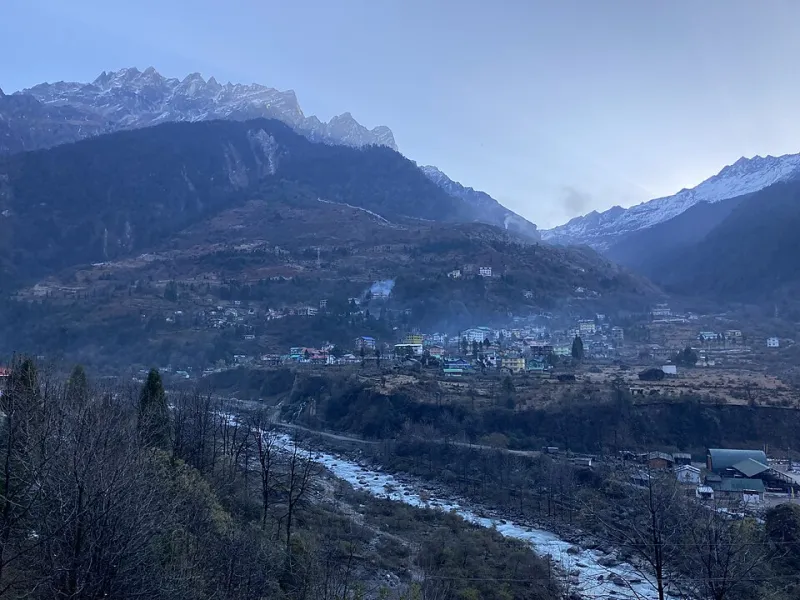
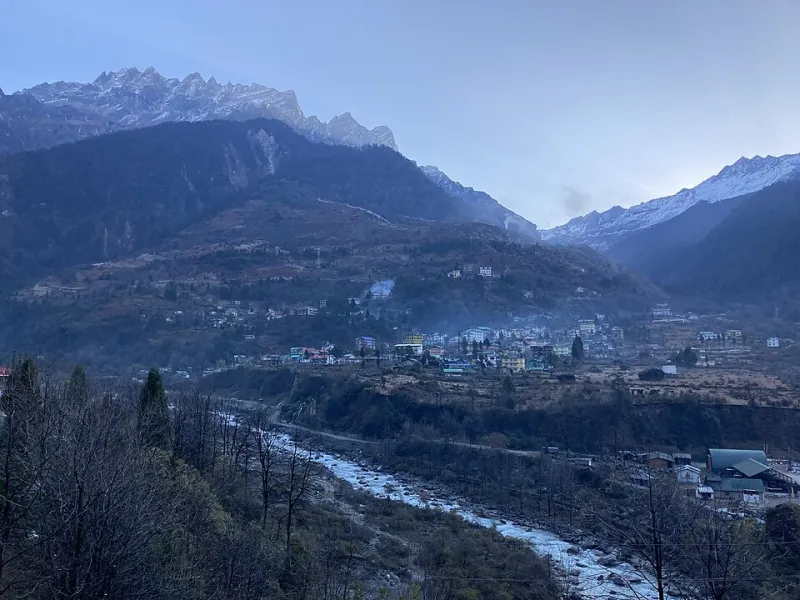
Photo: Unknown, CC0, via Wikimedia Commons
In 2023, the United States Surgeon General issued an advisory that stopped many Americans in their tracks. Loneliness, the report declared, had reached epidemic proportions. Despite living in an era of unprecedented connectivity—instant messaging, social platforms, video calls across continents—tens of millions of Americans reported feeling profoundly unseen. The advisory noted that the health consequences of chronic loneliness rival those of smoking fifteen cigarettes a day.
Thousands of miles away, nestled in the folds of the eastern Himalayas, the Lepcha people have long operated under a cultural framework that takes the opposite premise as its foundation: that being genuinely witnessed by another human being is not a luxury or a byproduct of relationship, but its very purpose.
More Than an Audience
The English word "witnessing" carries legal and religious connotations—a courtroom observer, a bystander at a ceremony. In Lepcha cultural life, the concept carries a far weightier charge. To witness someone, in the Lepcha sense, is to turn toward that person with the full force of one's attention, to receive what they are expressing without immediately redirecting the moment toward oneself, and to acknowledge—verbally or through sustained presence—that what has been shared has genuinely landed.
This is distinct from listening, which can be passive. It is distinct from watching, which can be voyeuristic. And it is categorically different from the performance-and-audience dynamic that structures so much of modern American social life, including the logic of social media platforms, where visibility is quantified in likes, shares, and follower counts.
Lepcha elders describe the act of witnessing as something closer to holding. One person creates, through their sustained and undivided attention, a kind of container in which the other person can fully exist. The witness does not evaluate or advise unless asked. They do not redirect the conversation. They simply remain—fully, accountably present.
Witnessing as Daily Practice
What distinguishes Lepcha witnessing from romanticized notions of "deep listening" popular in Western wellness circles is its embeddedness in ordinary life. It is not reserved for grief rituals or ceremonial occasions, though it certainly appears in those contexts. It operates in the texture of daily interaction.
When a younger community member returns from a difficult journey—whether physical or emotional—the appropriate response from an elder is not immediately practical: not "what happened" or "what do you need." The first gesture is one of acknowledged arrival. The elder's attention signals: I see that you have come back changed. I am here to receive whatever that means.
This practice extends to communal gatherings, agricultural work, and the preparation and sharing of food—spaces where Lepcha cultural life has historically woven together the practical and the relational. The act of sitting with someone while they eat, of watching them with warmth rather than distraction, carries its own witnessing charge.
Contemporary Lepcha community members living in Sikkim and Darjeeling have noted that maintaining these practices under the pressures of modernization requires conscious effort. Smartphones arrive at the dinner table. Young people migrate to cities where the pace of interaction militates against sustained presence. The witnessing tradition does not disappear, but it requires, as one community educator described it, "choosing to be slow in a world that punishes slowness."
The Performance Trap
To understand why Lepcha witnessing feels so foreign to many Americans, it helps to examine what has replaced it. Social media platforms are architecturally designed around a performance-and-audience model. Users curate versions of themselves—highlight reels, carefully lit photographs, witty captions—and then await the response of a largely anonymous crowd. The feedback loop is real, and the neurological rewards are genuine. But what is being seen is a construction, not a person.
This distinction matters enormously. When a performance receives applause, the performer is validated. But the performer, qua person, remains unseen. The applause responds to the mask, not to the face beneath it. This is, arguably, why social media engagement correlates so poorly with reduced loneliness—and why, in some studies, heavy social media use is associated with increased feelings of isolation.
The Lepcha witnessing tradition inverts this logic entirely. Its premise is that the mask must come down before genuine witnessing can occur, and that the witness must be willing to receive whatever is revealed without flinching, judging, or redirecting. This is not comfortable. It asks something significant of both parties.
Accountability in the Act of Seeing
One dimension of Lepcha witnessing that deserves particular attention is its ethical weight. To witness someone is not merely an emotional gesture—it carries obligation. Having been present for another person's truth, the witness is bound by that knowledge. They cannot later claim ignorance. They cannot treat the person as a stranger.
This accountability distinguishes Lepcha witnessing from the kind of performative empathy that has become common in American public discourse—the social media post of solidarity, the momentary expression of concern that vanishes when the news cycle moves on. In the Lepcha framework, witnessing creates a durable bond. The person who has been seen can return to the witness and say, in effect: You were there. You know me. Hold me to that.
This mutuality is central. Witnessing is not a gift flowing in one direction. Communities that practice it understand that the witness will, in time, need to be witnessed in return. The roles are not fixed. The practice distributes the labor of genuine attention across the whole community, rather than concentrating it in the hands of professionals—therapists, counselors, clergy—as American culture tends to do.
What the Mountain Teaches About Presence
The Lepcha relationship to the natural landscape of the eastern Himalayas is inseparable from their social practices, and witnessing is no exception. The mountains, rivers, and forests of this region are understood not as passive scenery but as presences—entities that register human life and, in some sense, receive it. To live in right relationship with this landscape is to practice a kind of mutual acknowledgment that mirrors the interpersonal witnessing described above.
This ecological dimension of witnessing offers a provocation to American audiences: what might change if we approached not only our human relationships but our physical environments as spaces of mutual recognition? The loneliness epidemic is, some researchers argue, partly a consequence of living as though the world around us is indifferent to our presence. The Lepcha tradition suggests that the feeling of being truly seen may require expanding our understanding of what—and who—can see us.
A Practice Worth Borrowing
None of this is to suggest that American readers can simply adopt Lepcha witnessing wholesale, stripped from the cultural, linguistic, and ecological context that gives it meaning. Cultural borrowing without understanding is its own kind of failure of attention.
What the Lepcha practice does offer, however, is a clarifying mirror. It asks us to examine the difference between visibility and being known, between an audience and a witness, between connection as performance and connection as presence. In a nation where loneliness has become a public health crisis, that distinction is not academic. It is, arguably, one of the most urgent questions of our time.
The Lepcha people have been asking it—and answering it, daily, in the ordinary gestures of community life—for generations. Their answer is worth hearing.