The Quiet Resolution: How Lepcha Traditions of Indirect Speech and Patient Mediation Offer a Path Through Conflict

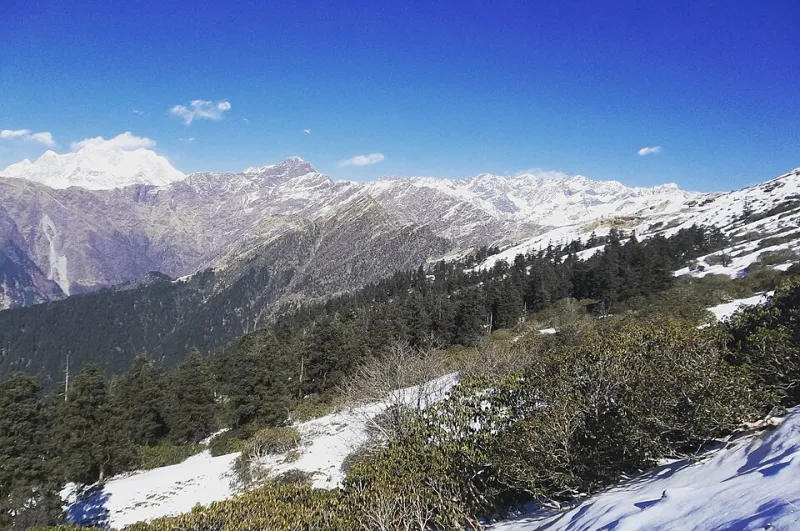
Photo: Himalayan village elders gathering community meeting Sikkim, via himalayashomestays.com
In many American settings — the office conference room, the family dinner table, the comment section of a news article — conflict tends to follow a recognizable arc. Voices rise. Positions harden. One party attempts to overpower the other through volume, speed, or rhetorical force. The goal, implicitly, is to win. What remains after the exchange is often not resolution but residue: lingering resentment, fractured trust, and the exhausting sense that the disagreement was never truly heard by either side.
Among the Lepcha people of the Sikkim Himalayan region — one of the oldest indigenous communities of the eastern Himalayas — the architecture of disagreement looks fundamentally different. Conflict is not suppressed, nor is it ignored. Instead, it is routed through a carefully maintained system of linguistic conventions, social protocols, and communal structures that prioritize relationship preservation over individual victory. Understanding how this system functions, and why it works, requires looking closely at the language itself.
Language as a De-escalation Tool
The Lepcha language, known as Róng or Rongring, carries within its grammatical structures a set of built-in mechanisms that make direct confrontation linguistically awkward — and culturally discouraged. Scholars who have studied Lepcha communication note the prevalence of what linguists call "face-saving" constructions: phrasings that allow a speaker to register objection, correction, or displeasure without targeting the listener as an agent of wrongdoing.
Rather than asserting "you are wrong" — a formulation that places blame squarely on the other person — Lepcha speakers traditionally employ constructions that locate the problem in circumstances, misunderstandings, or shared confusion. The effect is subtle but significant. By grammatically diffusing personal responsibility, the language creates space for the other party to reconsider their position without experiencing it as a public defeat. The disagreement becomes something the two parties face together, rather than a contest between them.
This is not evasion. It is precision of a different order — one that treats the relationship between speakers as a variable worth protecting, even when the content of the disagreement is serious.
The Role of Indirection in Everyday Discourse
Beyond grammatical structure, Lepcha communicative culture has long relied on indirection as a primary mode of addressing tension. When a direct statement risks causing shame or rupturing social harmony, speakers may instead employ proverbs, metaphorical reference, or narrative — telling a story whose moral speaks obliquely to the situation at hand.
This practice has deep roots in Lepcha oral tradition. The community's rich heritage of folk narratives was never purely entertainment; stories served as portable ethical frameworks that could be invoked in moments of social friction. A well-chosen tale, understood by both parties to be relevant to their dispute, could communicate what a direct accusation could not: that a line had been crossed, that an adjustment was needed, and that the community's expectations had not been met — all without naming names or assigning explicit fault.
For American readers accustomed to a communication culture that prizes directness and explicit statement, this may initially seem like avoidance. But researchers who study high-context communication traditions argue the opposite: indirection of this kind requires greater communicative skill, not less. The speaker must understand the situation deeply enough to select the right story or proverb. The listener must be attentive enough to receive it. Both parties must share a cultural vocabulary rich enough to make the exchange meaningful. Far from bypassing the conflict, this approach demands that both participants engage with it on a more nuanced level.
Elder Mediation and the Community as Witness
When interpersonal strategies prove insufficient — when a disagreement between two individuals or families grows beyond what indirect speech can quietly absorb — Lepcha communities have traditionally turned to a more formal mechanism: elder mediation conducted in the presence of the broader community.
This practice differs in important ways from Western models of arbitration or legal adjudication. The goal is not to determine a winner and a loser, nor to assign punishment. The mediating elder — typically a respected figure whose authority derives from demonstrated wisdom and long community service — functions less as a judge and more as a steward of relationships. Their role is to create the conditions under which both parties can speak fully, be genuinely heard, and ultimately arrive at a shared understanding that allows them to continue living as neighbors.
The presence of the community is not incidental. Witnesses serve as a kind of social memory, holding the terms of any resolution in collective consciousness. This accountability structure means that agreements reached through mediation carry a weight that purely private settlements do not. Both parties have spoken before their community; both are therefore accountable to it.
What is perhaps most striking to outside observers is the patience the process demands. Lepcha mediation does not operate on the compressed timelines that characterize American dispute resolution. A single matter may require multiple gatherings, extended periods of reflection, and the gradual movement of positions over days or weeks. Speed is not a value in this context. Durability is.
Silence as an Active Instrument
In Lepcha communicative practice, silence is not the absence of communication — it is one of its most deliberate forms. When a speaker pauses at length before responding to a challenging statement, that pause is understood not as hesitation or confusion but as respect: for the gravity of what has been said, for the complexity of the situation, and for the relationship between the parties.
This stands in sharp contrast to the rhythms of American conversational culture, where silence in a dispute is frequently interpreted as weakness, disengagement, or concession — prompting the other party to fill the void with further argument. In Lepcha tradition, the silent pause signals that the listener is taking the matter seriously enough to think before speaking. It is, in this sense, an act of courtesy.
The practical implications for those navigating conflict in American workplaces, families, or civic spaces are worth considering. Deliberately slowing down a heated exchange — resisting the impulse to respond immediately, allowing silence to do some of the work — can change the emotional temperature of a disagreement in ways that no particular choice of words can replicate.
What American Culture Might Learn
The United States is, by most measures, in the midst of a prolonged crisis of disagreement. Political polarization, workplace incivility, and the corrosive dynamics of social media have made conflict a near-constant feature of daily life — and have made constructive resolution feel increasingly out of reach. Against this backdrop, the Lepcha model offers not a prescription but a provocation.
What if the goal of a difficult conversation were not to prevail but to preserve? What if the language we used in moments of tension were designed to protect the relationship rather than advance the argument? What if communities, rather than leaving individuals to manage their disputes in isolation, positioned themselves as active participants in the work of resolution?
These are not rhetorical questions. They are, in Lepcha communities, answered every day through practice — through the careful grammar of a language that makes blame difficult to assign, through the wisdom of elders who understand that a community's health depends on the quality of its disagreements, and through the patient, deliberate work of people who have decided that the relationship matters more than the last word.
The roof of the world, it turns out, has much to teach those of us living at lower altitudes about the art of being heard without having to shout.