Where the Ground Remembers You: The Lepcha Word That Reimagines What It Means to Belong

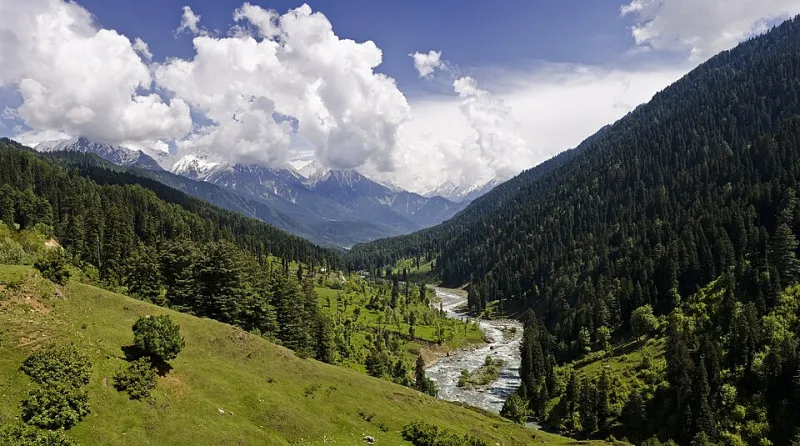
Photo by Photo by Rudra Gupta on Unsplash on Unsplash
Ask an American what 'home' means, and you will receive a thousand different answers. For some, it is a ZIP code. For others, it is a feeling—a warmth conjured by a particular smell, a kitchen table, a street corner at dusk. For millions of Americans shaped by immigration, displacement, or simple restlessness, home is something perpetually negotiated, never quite settled. The English language, for all its flexibility, offers a surprisingly thin vocabulary for this experience.
The Lepcha people of the eastern Himalayas—the indigenous inhabitants of a mountainous region spanning parts of present-day Sikkim, Darjeeling, Nepal, and Bhutan—possess a word that addresses this inadequacy with remarkable precision. That word is yuksom, and it does not translate easily. It was never meant to.
More Than a Location
At its most literal, yuksom refers to a place of origin—the ground from which a person, a family, or a community has grown. But to stop there would be to mistake the root for the whole tree. In Lepcha usage and cultural understanding, yuksom encompasses far more than geography. It implies an ongoing, living relationship between a people and the land they consider ancestral. It suggests that place is not merely a backdrop to human life but an active participant in it—a keeper of memory, a source of spiritual sustenance, and a foundation of collective identity.
Unlike the English word 'homeland,' which tends to carry political or nationalistic overtones, yuksom is intimate and ecological. It is not declared by a government. It is not printed on a passport. It is recognized through practice—through the cultivation of particular plants, the observance of seasonal rituals, the telling of stories that name specific peaks, rivers, and forests as characters rather than settings.
For the Lepcha, the land of yuksom is understood to hold ancestral memory in a very literal sense. The spirits of those who came before are believed to remain present in the landscape—in old-growth trees, in the behavior of certain animals, in the quality of light on a particular hillside at a particular hour. To be in one's yuksom is, in this sense, to be in continuous conversation with one's ancestors. To leave it is to interrupt that conversation, though not necessarily to end it.
The Weight of Departure
This understanding of place has profound implications for how the Lepcha community processes migration and displacement—experiences that are, of course, deeply familiar to American audiences. The United States was built by people who left somewhere, voluntarily or by force, and its ongoing story is inseparable from the question of what is lost and gained in that leaving.
For many Lepcha individuals and families who have relocated to urban centers in India or abroad, yuksom functions less as a fixed address and more as a spiritual orientation. Scholars who have studied Lepcha oral traditions note that the concept carries an emotional and ethical dimension: one is understood to carry a responsibility toward one's yuksom, even from a distance. This responsibility might be expressed through language preservation, through the transmission of specific knowledge to younger generations, or through periodic return—physical or ceremonial—to the ancestral landscape.
This is a meaningfully different relationship with departure than the one most Americans are accustomed to performing. In mainstream American culture, mobility is frequently celebrated as a virtue, and the ability to 'start over somewhere new' is treated as a form of freedom. Yuksom does not deny the possibility of new beginnings, but it insists that origin is not something to be simply left behind. It remains, in some essential way, a part of who you are.
Belonging Without Ownership
Perhaps the most striking dimension of yuksom for an American audience is what it does not include: the concept of ownership. In Lepcha cosmology, the relationship between a people and their yuksom is one of stewardship and reciprocity, not possession. The land does not belong to the people; rather, the people belong to the land. This inversion is not merely poetic. It has historically shaped Lepcha land-use practices, resource management, and attitudes toward development in ways that contemporary environmental researchers have found instructive.
In a country where land ownership is foundational to both the legal system and the cultural imagination—where 'owning a home' is shorthand for stability, success, and full social membership—this Lepcha orientation invites serious reflection. What would it mean to belong to a place rather than to own it? What obligations would that belonging entail? These are not merely philosophical questions. They surface in American debates about Indigenous land rights, urban gentrification, environmental stewardship, and the meaning of community investment.
A Word for Our Moment
The United States in the early twenty-first century is a nation visibly wrestling with questions of identity and place. Demographic shifts, economic migration, climate-driven relocation, and ongoing reckonings with the legacies of colonization and forced displacement have made belonging one of the central anxieties of American public life. Where do I come from? Where do I belong? What do I owe to the place that shaped me, and to the place I now inhabit?
The Lepcha concept of yuksom does not resolve these questions—no single word from any language could—but it offers something valuable: a different grammar for asking them. It suggests that belonging is not a status to be granted by institutions or confirmed by documents, but a relationship to be cultivated through attention, practice, and reciprocity. It implies that the places we come from continue to make claims on us, and that honoring those claims is not nostalgia but responsibility.
For the many Americans who carry hyphenated identities—who feel the pull of ancestral homelands alongside the reality of lives built elsewhere—there may be something quietly liberating in the Lepcha framework. Yuksom makes room for complexity. It allows a person to be from more than one place, to hold multiple landscapes in the heart, without requiring that one supersede the other.
The Language That Holds the Knowledge
It is worth noting that yuksom exists as a living concept precisely because the Lepcha language has survived. Languages are not merely communication tools; they are archives of accumulated human understanding about how to inhabit the world. Every language that disappears takes with it not only words but entire ways of perceiving, categorizing, and relating to reality.
The Lepcha language, classified as endangered by linguistic organizations, carries within it a philosophy of place that took centuries of careful observation and communal reflection to develop. The word yuksom is one thread in that larger tapestry. To encounter it is to glimpse a worldview in which human beings are understood as participants in a living landscape rather than masters of an inert one—a perspective that, in this particular historical moment, seems less like ancient wisdom and more like urgent instruction.
For American readers accustomed to thinking of language as a practical instrument, the story of yuksom is a reminder that some of the most important things a language can do is hold open a door to ways of being that our own vocabulary has not yet learned to name.