Stories Are Not Data: Lepcha Oral Tradition and the Consent Problem in Generative AI

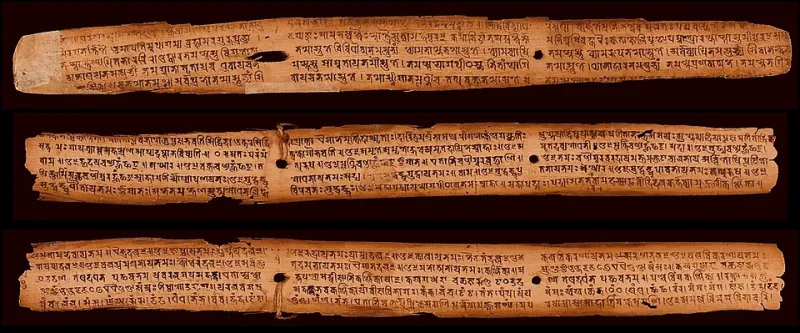
Photo: Lepcha storyteller oral tradition Himalaya community recording, via a.1stdibscdn.com
Generative AI systems are trained on text, images, and sound collected at enormous scale. Much of that material is scraped from the open web, where the legal and ethical rules are still being argued. For Lepcha oral tradition, the argument arrives in an unfamiliar form. A story may not have a single author. It may belong to a family, a clan, a place, or a ritual office. It may be shared widely, but it may still have custodians. That is an awkward fit for a system that treats language as data and authorship as an individual property right.
A Story Can Have a Home
In many Lepcha communities, stories are not free-floating entertainment. They are attached to land, season, kinship, and memory. A story about a river may belong near that river. A story about a plant may be told by certain people at certain times. Not every story is secret. Many are told openly, especially to children. But openness is not the same as abandonment. A story can be public and still have a home.
This distinction is difficult to translate into American legal categories. United States copyright law tends to ask who wrote a work and when it was fixed in a tangible medium. Lepcha oral tradition often asks different questions: who has the right to tell it, who must be consulted, what season is appropriate, and what obligations follow from hearing it. These are not the same as authorship. They are closer to stewardship.
Why Scraping Feels Like Taking
From the perspective of a tech company, training data is raw material. From the perspective of a community, a story is a relationship. When the two perspectives meet, the result can feel less like borrowing and more like extraction. The story is lifted out of its place, stripped of context, and reassembled by a machine that has no obligation to the teller.
This is not only a Lepcha problem. Indigenous and local communities around the world have raised similar concerns about digitized knowledge, from plant medicine to sacred songs. The CARE Principles for Indigenous Data Governance, developed by the Global Indigenous Data Alliance, argue that data should be governed by collective benefit, authority to control, responsibility, and ethics. The principles are a useful starting point, but they are not yet standard practice in the AI industry.
Credit Is Not Consent
One common response from AI developers is to promise attribution. If a model is trained on a story, perhaps the output can cite the source. Attribution is better than erasure. But credit is not consent. A community may not want its story used to generate commercial content, even with a citation. A ritual specialist may not want a sacred narrative available to anyone who types a prompt.
Consent is also complicated by scale. A single storyteller cannot speak for an entire community. A community may not have a formal legal entity. A language may be spoken across borders. These are real difficulties, not excuses for inaction. They mean that consent has to be designed rather than assumed.
Four Tests for Collective Knowledge
A practical framework for respecting collective knowledge in generative AI would need at least four elements. The first is consent. Communities should be able to decide whether their knowledge enters a training corpus, and that decision should be collective where the knowledge is collective. The second is context. Provenance matters: who told the story, where it comes from, what restrictions apply, and what may not be generated from it.
The third is credit. Attribution should name the community and the place, not only an individual informant. The fourth is control. Communities should have mechanisms to withdraw material, limit uses, and share in benefits where commercial value is created. These four tests are not a complete legal solution. They are a way to make the questions visible before the scraping begins.
Tools such as Traditional Knowledge Labels, developed by Local Contexts, already offer a model for marking material with community-specific protocols. They can indicate that material is open, restricted, or not for commercial use. Labels alone will not stop bad actors. But they can shift the default from silent appropriation to visible permission.
From Labels to Leverage
Labels need institutions behind them. A community needs a way to negotiate, not just a sticker to apply. Data trusts, community licenses, and contracts can give collective knowledge some of the leverage that individual copyright already provides. AI companies can adopt provenance standards and disclose training data sources. Policymakers in the United States can require greater transparency without pretending that every training decision is a simple copyright question.
The goal is not to stop all use of Lepcha stories. Oral tradition has always traveled. The goal is to make travel accountable. A story that moves without its obligations is not preserved; it is orphaned.
The Uncomfortable Question
The uncomfortable question at the heart of AI is not only whether a model can generate a Lepcha-sounding story. It is who gets to decide what happens to a story after it leaves the mouth of its teller. In Lepcha tradition, that decision is rarely individual. It is embedded in community, place, and obligation.
Generative AI is built on a different assumption: that language is available until someone proves otherwise. That assumption is now being tested around the world. Lepcha oral tradition does not offer a simple answer. It offers a better question: not whether a story can be taken, but whether it can be taken responsibly.