Fermented Greens and Zero Food Miles: Inside a Himalayan Pantry That Never Needed a Label

Photo: Rajani Gairshail, CC BY-SA 4.0, via Wikimedia Commons
American grocery shoppers in 2025 can read a sticker that tells them their apple traveled 9,000 miles. The locavore movement, farmers market culture, and the farm-to-table restaurant boom all emerged as reactions to that distance—a slow attempt to shrink the gap between field and fork.
There is a quieter lesson waiting in the eastern Himalaya. Among the Lepcha people of Sikkim and the Darjeeling hills, the question of how far food traveled never needed asking. The answer was: no farther than the day's walk, often no farther than the terrace outside the kitchen window.
A Pantry Built Into the Slope
Traditional Lepcha settlements cling to mid-altitude slopes where rice terraces give way to forest. This vertical geography produced a cuisine organized by elevation rather than by season alone. Households harvested in layers: cultivated grains below, kitchen gardens at the homestead, and the wild forest above—the true treasury of the pantry.
That forest larder included nettles and wild greens gathered in the pre-monsoon weeks, fern fiddleheads, mushrooms coaxed from rotting logs, and dozens of leafy plants most outsiders would walk past without a glance. Ethnobotanists working in Sikkim have documented well over a hundred wild plant species in regular culinary use among the region's communities. Foraging here was never a boutique hobby; it was the infrastructure of survival, governed by an ethic of restraint—take what you need, leave the root, return next season.
Fermentation as Preservation and Identity
What the mountains could not provide fresh, time and microbes provided. Fermented foods anchor Himalayan foodways across ethnic lines, and Lepcha kitchens are no exception. Wild greens are bitter and abundant all at once; fermentation tames the first problem and solves the second, converting a two-week glut into a year-round staple.
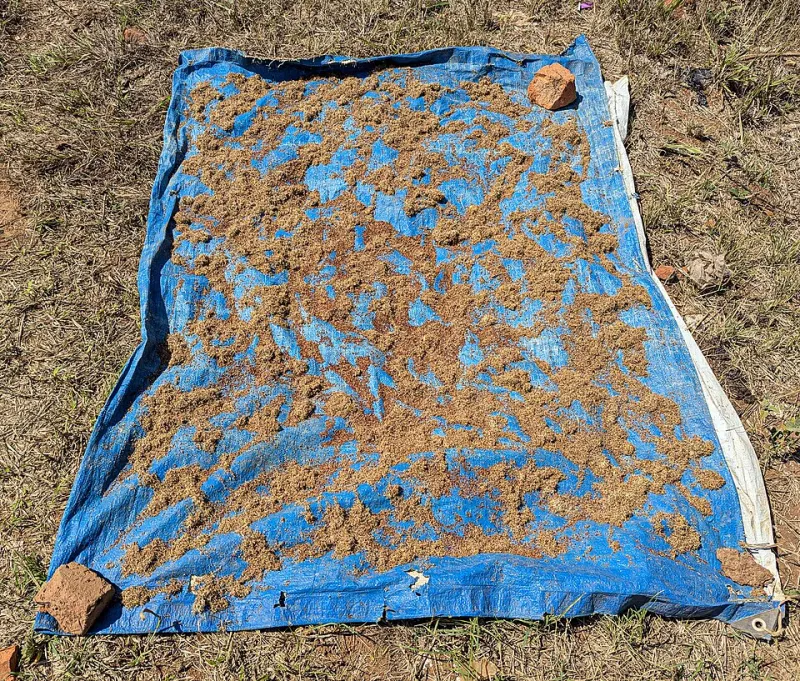
Gundruk—fermented leafy greens dried into a sour, umami-rich base for soups—is perhaps the region's most famous example, and kinema-style fermented soybeans and bamboo shoot ferments appear throughout the eastern Himalaya. These are not relics. They are living techniques, passed hand to hand, requiring no electricity, no refrigeration, and no supply chain.
American fermentation culture—kombucha brewers, sourdough obsessives, the small-batch kimchi entrepreneurs of Portland and Brooklyn—has rediscovered some of this. But the Himalayan version carries a different logic. Fermentation there was never a lifestyle accessory. It was the difference between winter scarcity and winter sufficiency.
When 'Local' Was Never a Choice
Here lies the sharpest contrast with the American conversation. When a Colorado restaurant advertises a thirty-mile menu, it is making a statement—a deliberate, priced choice within a globalized food system. When a Lepcha household cooks from the surrounding slope, locality is not a statement. It is simply the condition of life.
This distinction matters because it reframes what 'eating local' could mean. American locavorism often treats proximity as a premium—something you pay extra for at a boutique price. The traditional Himalayan model suggests something different: locality as default, supported by knowledge rather than marketing. The expensive part of a hyper-local diet is not the food. It is the knowledge—of plants, seasons, terrain, and technique—accumulated across generations.
What US Readers Can Actually Take Away
No one is suggesting Americans forage their suburbs into self-sufficiency. But three practices translate with surprising ease:
- Learn your wild edges. Dandelion greens, wood sorrel, wild garlic, and nettles grow in every US state. Even a single reliably identified plant reconnects a household to seasonal time.
- Ferment a glut, not a garnish. When CSA boxes overflow with greens in July, the traditional answer—salt, weight, patience—beats the compost bin.
- Eat by elevation, or its equivalent. In flat America, the analogue is eating by what your actual region produces in its actual month, a discipline that once defined every cuisine on earth.
The Lepcha pantry was never 'sustainable' in the modern marketing sense. It was simply coherent—food, place, and knowledge shaped into a single system over centuries. The farm-to-table movement is, in a sense, America's attempt to reassemble what that coherence once provided. The Himalaya suggests the blueprint is older, and simpler, than we tend to admit.