The Mountain That Was an Elder Before It Was a Defendant: Kanchenjunga and the Rights of Nature
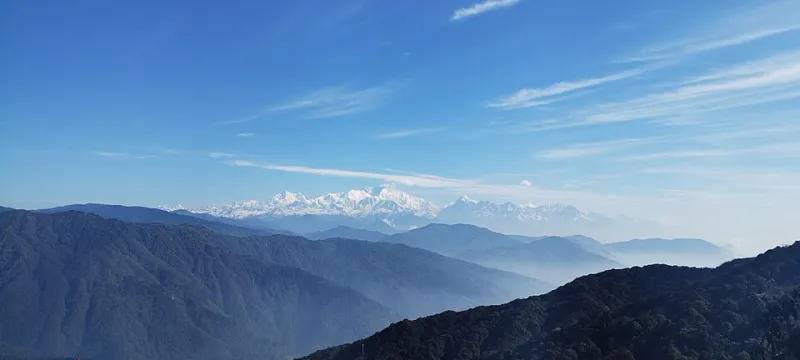
Photo: NLPratik, CC BY 4.0, via Wikimedia Commons
In 2017, New Zealand's Parliament granted the Whanganui River legal personhood, ending one of the longest indigenous legal struggles in the world. In 2019, Bangladesh gave all of its rivers the same status. In the United States, a scattered but growing movement has produced local ordinances granting rights to ecosystems—from a Pennsylvania township protecting its watershed to California's Wild Rivers Coast, where the Klamath River's rights were affirmed by ballot measure in 2020. The question is no longer whether nature can hold legal rights in theory. It is whose worldview the law will borrow to make that idea work.
The Lepcha people would like the courts to know the answer arrived in the Himalaya a very long time ago.
The Sacred Peak at the Edge of the Map
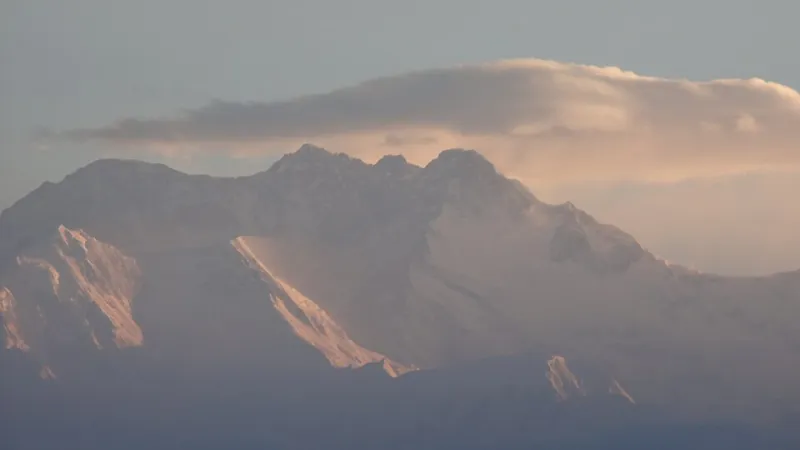
Kanchenjunga, the world's third-highest mountain, rises along the border of Sikkim and Nepal. For the Lepcha, it is not a landmark. Tradition holds that the first Lepcha man and woman were created from the snows of its summit, and that the mountain is the final resting place of the departed. Its slopes are threaded with sacred sites; its lakes and caves appear in origin narratives. When mountaineering expeditions began pressing to climb the peak, Lepcha objections were not aesthetic or environmental in the modern sense—they were objections to trespassing on an ancestor.
This relationship predates modern environmental law by centuries. It is, in effect, a functioning rights-of-nature framework: the mountain holds standing, humans hold obligations, and the community enforces both through custom, ritual, and social sanction.
What the Courts Are Actually Debating
Legal personhood for ecosystems sounds exotic, but the mechanism is familiar. Corporations have held personhood in American law since before the Civil War. Ships can be sued. Cities are 'persons' in some statutory contexts. The question is never whether a nonhuman entity can hold rights—it is whether we choose to extend the fiction to a river.
Critics raise fair objections: Who speaks for the river? Can guardians be removed? Does personhood actually stop pollution, or just generate litigation? New Zealand's Whanganui arrangement, with a legally appointed guardianship body of iwi and government appointees, offers one working answer. American experiments remain small, local, and legally vulnerable—state courts have struck down some rights-of-nature ordinances, and the movement's constitutional footing is untested.
What the American debate lacks is not legal machinery. It is a cultural premise: that the natural world is a party with whom we have a relationship, rather than property with which we have a transaction.
The Premise the Himalaya Never Lost
This is where the Lepcha case becomes more than color commentary. The rights-of-nature movement in the West is often framed as radical innovation—a bold legal experiment. From a Lepcha perspective, it is a late, partial rediscovery. The sacred standing of Kanchenjunga was never a metaphor awaiting legal codification. It structured behavior: which slopes could be entered, which lakes could be touched, which peaks remained unclimbed out of respect.
The contrast with American wilderness history is instructive. The US conservation tradition, from Yellowstone onward, protected land by removing people and designating 'wilderness'—a place empty of relationship, managed by an administrative state. Indigenous sacred relationships were treated as obstacles to that model. The rights-of-nature movement quietly reverses this: it suggests that relationship, not emptiness, is what the law should protect.
A Test Case Worth Watching
Sikkim's own politics illustrate both the promise and the fragility of the idea. The state restricted the Kanchenjunga climbing circuit out of respect for its sacred status, and Dzongu—a Lepcha reserve on the mountain's flanks—has been the site of prolonged resistance to hydropower development, with Lepcha activists fasting and litigating to defend the landscape. Their arguments were made in the language of sacred obligation; the state's responses came in the language of megawatts and revenue. That collision is the same collision now arriving in American courtrooms, dressed in different vocabulary.
If rights of nature are to succeed in the United States, they will need more than clever ordinances. They will need the cultural groundwork that indigenous communities like the Lepcha have maintained for generations: the understanding that a mountain can be an elder, a river a relative, and law merely the formal recognition of relationships that were never ours to deny.
The courts are catching up. The Himalaya has been waiting.