The Forest Keepers of Sikkim: Indigenous Lepcha Stewardship and the Future of Climate Resilience

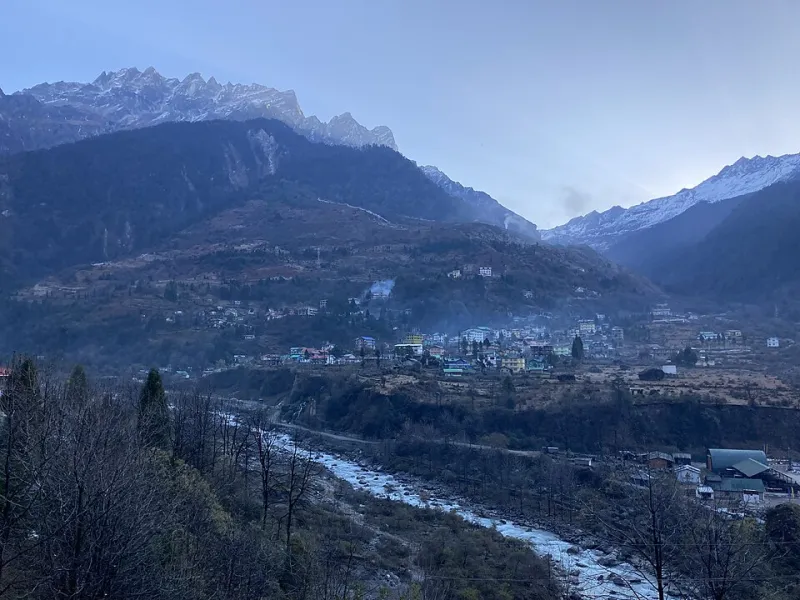
Photo: Eastern Himalayan cloud forest biodiversity conservation indigenous community, via akshayavana.com
The Language of the Forest
To understand how the Lepcha people have cared for their forests, one must first understand how they speak about them. The Lepcha language — Róng, as its speakers call it — contains a vocabulary for the natural world of extraordinary specificity. There are distinct terms not merely for broad categories like "tree" or "river" but for the precise stages of a plant's growth cycle, the behavioral patterns of particular animal species at different elevations, and the micro-climatic conditions that signal changes in the forest's health.
This linguistic granularity is not ornamental. It is functional. A community that has words for concepts that other languages must describe in entire sentences is a community that has been paying very close attention for a very long time. The Lepcha lexicon of ecology is, in effect, a compressed archive of multigenerational observation — a living field guide encoded in grammar.
For linguists and ethnobotanists working in conservation contexts, this relationship between language and ecological knowledge is increasingly recognized as critical. When a language loses speakers, the knowledge embedded in its vocabulary does not simply transfer to another tongue. It disappears. The campaign to document and revitalize the Lepcha language, therefore, is not merely a cultural preservation effort — it is an environmental one.
Sacred Groves and the Architecture of Protection
Long before the establishment of national parks, wildlife refuges, or international conservation frameworks, the Lepcha maintained protected forest zones through a system of sacred geography. Certain groves, watersheds, and mountain areas were designated as spiritually significant — places where human extraction was prohibited or strictly limited, governed not by government regulation but by religious obligation and community consensus.
These sacred sites, known in the broader Himalayan context as beyul or places of refuge, served an ecological function that modern conservation biology would recognize immediately: they created protected refugia where biodiversity could persist undisturbed, functioning as reservoirs from which species could repopulate surrounding areas. The spiritual logic and the ecological logic, in this case, produced identical outcomes.
This is not coincidental. Communities that have inhabited a landscape for centuries develop, through accumulated trial and error, a practical understanding of what the land requires to remain productive and stable. The sacred designation of ecologically sensitive areas is one of the most efficient conservation mechanisms ever devised — it requires no enforcement budget, no satellite monitoring, and no international treaty. It requires only a community that believes the prohibition is meaningful.
Biodiversity as a Living Library
The Eastern Himalayas represent one of the most biologically diverse regions on Earth, a global biodiversity hotspot where the convergence of tropical, temperate, and alpine ecosystems produces an extraordinary density of species. The Lepcha homeland sits at the center of this zone, and the Lepcha have not merely witnessed this richness — they have, in many respects, actively sustained it.
Traditional Lepcha agricultural practices have historically favored polyculture over monoculture — the cultivation of multiple crop varieties in the same field rather than the industrial model of single-species cultivation at scale. This approach, common to many indigenous farming traditions, produces fields that function more like ecosystems than factories. They support greater insect diversity, retain soil moisture more effectively, and demonstrate greater resilience when individual crop varieties fail.
The Lepcha also maintained extensive knowledge of wild plant varieties, many of which served dual purposes as food sources and medicines. This knowledge base — sometimes called traditional ecological knowledge, or TEK, in academic literature — represents an irreplaceable pharmacological and botanical resource. Several plant compounds identified through indigenous knowledge systems have subsequently been investigated by pharmaceutical researchers; the Lepcha tradition contains analogous repositories of botanical intelligence that have yet to be fully documented.
What Modern Conservation Can Learn
The dominant model of conservation in the United States and much of the Western world has historically operated on a separation principle: protect nature by removing humans from it. The national park system, for all its genuine achievements, was built in part on the displacement of indigenous communities whose presence was deemed incompatible with wilderness preservation. The ecological consequences of this approach have been, in many cases, counterproductive — the removal of communities that had functioned as active ecosystem managers often destabilized the very environments the parks were created to protect.
The Lepcha model offers a different paradigm: conservation through habitation, relationship, and responsibility rather than through exclusion. The forest is not preserved despite human presence but in part because of it — specifically, because of a human community that understands its own wellbeing as inseparable from the forest's health.
This framework resonates with a growing movement in American conservation circles toward what practitioners call "biocultural" approaches — conservation strategies that recognize the interdependence of cultural and biological diversity. Organizations working in this space increasingly seek partnerships with indigenous communities rather than treating indigenous land use as a problem to be managed. The Lepcha example, documented and shared, strengthens the evidence base for this shift.
Climate Disruption and the Urgency of Documentation
The cloud forests of Sikkim and the Darjeeling hills are already experiencing measurable changes as a result of global climate disruption. Shifting rainfall patterns, rising temperatures at higher elevations, and the upward migration of species are altering ecosystems that the Lepcha have observed and interacted with for generations. The knowledge held by elder community members — knowledge calibrated to conditions that are now changing — faces a compounding threat: not only the general pressure of cultural assimilation and language loss, but the accelerating obsolescence of environmental baselines.
This creates genuine urgency for documentation efforts. Researchers working with Lepcha communities to record traditional ecological knowledge are, in a real sense, racing against two simultaneous clocks: the demographic reality of aging knowledge holders and the ecological reality of a rapidly transforming landscape.
For American readers engaged with environmental justice, this situation will carry a familiar resonance. The same forces — colonization, cultural displacement, and now climate change — that have eroded indigenous ecological knowledge systems in North America have operated, with local variations, across the Himalayan region. The Lepcha experience is not an exotic footnote to the global conservation story. It is one of its central chapters.
Voices That Conservation Cannot Afford to Lose
The Lepcha people have long called themselves the Róng, meaning, in one interpretation, "ravine folk" — people whose identity is inseparable from the terrain they inhabit. That identification between a community and a landscape, sustained across centuries of political upheaval and cultural pressure, is itself a form of conservation knowledge. It is the knowledge of how to stay, how to care, and how to remain accountable to a place.
As the world searches for scalable solutions to biodiversity loss and climate instability, the insights preserved in Lepcha language, practice, and memory deserve a place in that conversation — not as a romanticized alternative to science, but as a complementary body of evidence developed through the most rigorous methodology available: generations of careful, consequential observation.