Thirteen Moons and a Mountain Harvest: How the Lepcha Calendar Reframes Our Relationship with Time
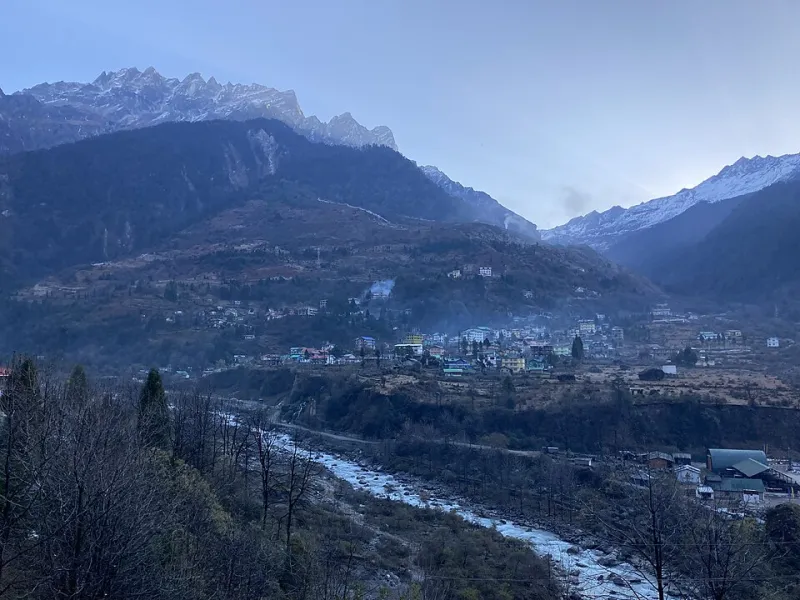
Photo: Mananjpatel1996, CC BY 4.0, via Wikimedia Commons
A Different Kind of New Year
For most Americans, January 1st arrives with fireworks, resolutions, and the blunt arithmetic of another year concluded. Time, in the dominant Western framework, is linear — a highway stretching forward, marked by uniform mile markers. The Lepcha people of Sikkim, Darjeeling, and the surrounding Himalayan foothills have long understood time in an entirely different register. Their traditional lunar calendar does not simply count days. It listens to them.
The Lepcha calendar, known in their language as Mun, organizes the year around the movements of the moon and the observable shifts of the natural world. Rather than imposing a fixed administrative grid onto the seasons, it bends to accommodate what the land is actually doing — when the rains arrive, when the millet is ready, when the forests grow quiet before winter. This responsiveness is not imprecision. It is a form of ecological intelligence that took generations to refine.
Twelve Months, Thirteen Moons
The Lepcha lunar calendar typically follows twelve named months, though intercalary adjustments — the addition of a supplementary lunar cycle — are made periodically to keep the calendar aligned with the solar year. This practice mirrors that of other lunisolar traditions worldwide, from the Hebrew calendar to the traditional Chinese system, yet the Lepcha version carries its own distinct agricultural logic.
Each month in the Lepcha system corresponds to a specific phase of the farming and foraging cycle. Planting seasons are not suggested by a printed date on a wall; they are read from the sky and confirmed by what the land communicates through temperature, rainfall, and the behavior of local flora and fauna. The month associated with the early rice-planting period, for instance, does not begin on a predetermined date but rather when the lunar and environmental conditions align to signal readiness. Farmers in this tradition are, in a meaningful sense, reading a living document.
This stands in sharp contrast to the industrialized agricultural calendar familiar to most Americans, in which planting windows are determined by supply chains, insurance deadlines, and commodity market cycles. The Lepcha approach asks a different question: not when does the schedule say to plant, but when is the land prepared to receive?
Festivals as Seasonal Anchors
The Lepcha calendar is inseparable from its cycle of festivals and ceremonies, many of which serve a dual purpose — honoring spiritual relationships with the natural world while also marking critical agricultural transitions. The festival of Tendong Lho Rum Faat, observed in August, centers on Mount Tendong, a peak held sacred by the Lepcha as a site of ancestral refuge and divine protection. Its timing corresponds to the height of the monsoon season, when the forests are most dense and the rivers most powerful.
Other observances mark the harvest of specific crops, the beginning of the honey-gathering season, or the period when particular medicinal plants reach their peak potency. These are not arbitrary religious dates retrofitted onto a calendar. They are the calendar — the spiritual and the agricultural woven into a single coherent system of seasonal awareness.
For Americans engaged with the growing slow-food and slow-living movements, this integration may feel both foreign and strangely familiar. The resurgence of interest in seasonal eating, farmers' markets, and moon-phase gardening in the United States reflects a hunger — perhaps not fully articulated — for exactly the kind of grounded temporal framework the Lepcha have maintained for centuries.
Time as Relationship, Not Resource
One of the most striking philosophical distinctions embedded in the Lepcha calendar is its treatment of time as a relational concept rather than a commodity. In contemporary American culture, time is something to be managed, optimized, and, frequently, mourned as insufficient. Productivity culture frames every hour as a unit of potential output. The Lepcha framework offers no such transactional logic.
Within the traditional worldview that the calendar expresses, time is the medium through which human communities remain in conversation with their environment. The months do not pass; they arrive, carrying specific responsibilities and gifts. The appropriate response to each lunar phase is not efficiency but attentiveness — to the garden, to the community, to the spiritual dimensions of the season.
This orientation has practical consequences. Communities that organize their agricultural activities around ecological signals rather than administrative calendars have historically demonstrated greater resilience in the face of climate variability. When the monsoon arrives late or the frost comes early, a calendar system that is already calibrated to observe and respond — rather than to prescribe — is better equipped to adapt.
What American Readers Can Take From This
It would be reductive to suggest that the Lepcha calendar is simply a wellness tool waiting to be adopted by American consumers. It is, first and foremost, a living cultural inheritance belonging to a specific people with a specific history and relationship to a specific landscape. That context matters, and it deserves respect.
However, the principles embedded in the Lepcha approach to time — ecological attentiveness, seasonal humility, the integration of spiritual and practical life — are not proprietary. They are part of a broader human wisdom tradition that many societies once shared and that many individuals in the United States are, in their own ways, attempting to recover.
For those drawn to practices like seasonal meal planning, lunar gardening, or simply the discipline of paying closer attention to the natural world, the Lepcha calendar offers a sophisticated, centuries-tested example of what that attentiveness can look like when it is not a lifestyle trend but a community inheritance.
A Calendar Worth Learning From
The Lepcha people have maintained their lunar calendar not merely as a cultural artifact but as a functional framework for living well in a particular place. As climate disruption increasingly reveals the fragility of systems built on the assumption that nature will conform to human schedules, this alternative model of temporal organization deserves serious attention.
Time, the Lepcha calendar quietly insists, is not something we own. It is something we participate in. That is a reorientation many of us, wherever we live, could afford to consider.