Beyond Blood: What the Lepcha Understanding of Kinship Can Teach Us About Living on a Warming Planet

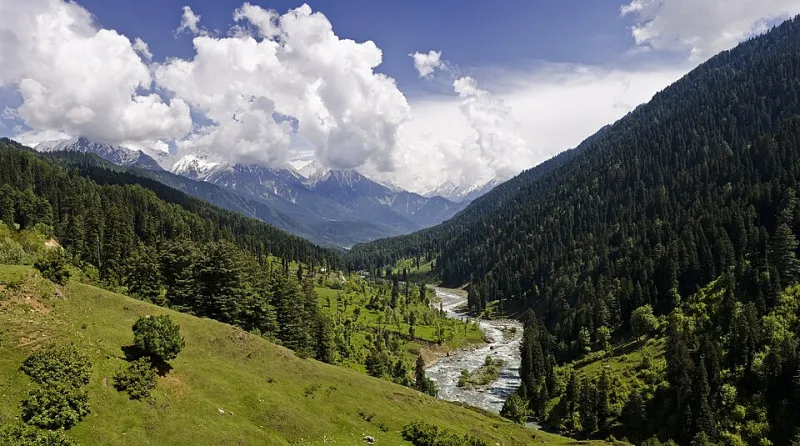
Photo by Photo by Lay Naik on Unsplash on Unsplash
In the United States, the word relative carries a fairly narrow charge. It conjures Thanksgiving tables, genealogy websites, perhaps the occasional awkward family reunion. Kinship, in the dominant Western framework, is fundamentally a matter of shared DNA—a biological ledger of who belongs to whom. Yet for the Lepcha people, the indigenous inhabitants of the Sikkim Himalaya and surrounding regions, this definition would seem not merely incomplete but dangerously impoverished. Their language, their cosmology, and their daily social practice encode a vision of relatedness so expansive that it reaches from the household fireplace all the way to the glacier-capped peaks above the treeline.
What is perhaps most striking to outside observers is that contemporary science—ecology, systems biology, even certain branches of cognitive anthropology—is now producing findings that resonate powerfully with what the Lepcha have long understood. The convergence is not coincidental. It points toward something fundamental about the nature of living systems that one culture preserved in oral tradition and another is only now recovering through instrumentation.
A Language Built for Connection
The Lepcha language, known to its speakers as Róng, contains a remarkably differentiated vocabulary for describing relational states between humans, non-human animals, plants, and landforms. Linguists who have studied Róng note that certain kinship terms are applied without irony or metaphor to features of the natural world—a particular stand of cardamom forest, a river bend, a boulder formation of cultural significance. These are not poetic flourishes. They are grammatically integrated designations that place non-human entities within the same relational network as grandparents and siblings.
This linguistic architecture reflects a deeper philosophical commitment. In Lepcha cosmology, the mountain Kanchenjunga—the world's third-highest peak, which dominates the skyline of Sikkim—is not merely a geographic feature or even a sacred symbol. It is understood as a living ancestor, a protector whose wellbeing is inseparable from the wellbeing of the community below. To harm the mountain's forests or pollute its glacial streams is, within this framework, an act of harm against kin. The ethical weight of that framing is considerable.
Anthropologists have sometimes characterized such belief systems as animism and filed them under the heading of pre-scientific worldview. That categorization, however, is increasingly difficult to sustain with intellectual honesty.
What the Ecologists Found
Over the past three decades, ecological research has produced a steady accumulation of evidence that living systems are organized around webs of mutual dependency far more intricate than earlier models suggested. The concept of the mycorrhizal network—the underground fungal web through which forest trees exchange nutrients, chemical signals, and even what some researchers cautiously describe as distress information—has captured significant public attention in the United States, partly through popular science writing and partly through documentary film. What that research reveals, in essence, is that a forest is not a collection of individual organisms competing for resources. It is a community of interdependent entities whose survival is bound together in ways that resemble, at least structurally, the bonds of kinship.
Systems biology has extended this insight further. The discipline studies organisms not as isolated units but as nodes within dynamic networks—metabolic, genetic, ecological—whose properties emerge from relationship rather than from individual components. The human microbiome research that has reshaped medicine over the past fifteen years offers a particularly vivid example: the human body, it turns out, is itself an ecosystem, host to trillions of microbial organisms without which its most basic functions would fail. The boundary between self and other, between relative and stranger, dissolves under sufficient scientific scrutiny.
The Lepcha did not need a genome sequencer to arrive at this conclusion. They arrived at it through sustained, multigenerational observation of the landscape they inhabited—and they preserved what they learned in the grammar of their language.
Kinship as Ethical Framework
The practical implications of the Lepcha kinship model extend well beyond the philosophical. When a community understands a river as a relative rather than a resource, the ethical calculus governing its use changes fundamentally. Extraction becomes a form of harm requiring justification; reciprocity becomes an obligation rather than a sentiment. Lepcha traditional ecological practice, including carefully regulated harvesting of forest products and the maintenance of sacred groves as protected zones, reflects this ethic in action.
For American audiences grappling with the consequences of climate change, this framework offers something genuinely useful. The dominant environmental discourse in the United States has tended to frame nature protection in terms of ecosystem services—what forests, wetlands, and clean water do for human beings, measured in economic units. This framing, while pragmatically effective in certain policy contexts, ultimately preserves the hierarchical separation between humanity and the natural world that arguably contributed to the current crisis. The Lepcha model proposes a different foundation: not stewardship of a resource, but membership in a community.
Philosophers of environmental ethics, from Aldo Leopold's land ethic to more recent work in multispecies anthropology, have been circling toward similar conclusions from within the Western intellectual tradition. The Lepcha simply offer a living example of what that ethical orientation looks like when it is not a theoretical proposition but a practiced reality embedded in everyday language and social life.
What Is Lost When Kinship Narrows
The urgency of this conversation is sharpened by the fact that the Lepcha language and the worldview it carries are under significant pressure. Like many indigenous languages of South Asia, Róng faces the erosive forces of dominant-language education systems, economic migration, and the cultural homogenization that accompanies globalization. When a language contracts, the knowledge encoded in its unique grammatical structures and vocabulary does not automatically transfer to the languages that replace it. Some of it simply disappears.
This is not merely a loss for the Lepcha community, though it is certainly that. It is a loss for the broader human conversation about how to inhabit the planet responsibly. At a moment when Western science is laboriously reconstructing, through expensive research programs and sophisticated modeling, an understanding of ecological interconnectedness that indigenous traditions have preserved for generations, the disappearance of those traditions represents a genuine epistemic impoverishment.
A Vocabulary Worth Borrowing
None of this is to suggest that American or Western audiences should appropriate Lepcha culture or pretend to adopt a cosmology that is not theirs. Cultural respect requires more than borrowing what seems useful and discarding the rest. What it does suggest is that the Lepcha model of kinship deserves serious intellectual engagement—not as a curiosity from a remote mountain culture, but as a sophisticated response to questions that contemporary science and philosophy are only beginning to ask with adequate precision.
The Lepcha have lived at the roof of the world for centuries, developing a language and a way of life calibrated to the complex, interdependent systems of one of the most biodiverse regions on Earth. That calibration did not happen by accident. It happened through exactly the kind of long-term, careful observation of living systems that science claims as its own highest value.
Perhaps the most honest thing Western science can do, at this particular moment in history, is acknowledge that it is not discovering the interconnectedness of life. It is catching up to those who never forgot it.