Words Without Borders: The Lepcha Language's Untranslatable Wisdom and What It Reveals About the Human Mind
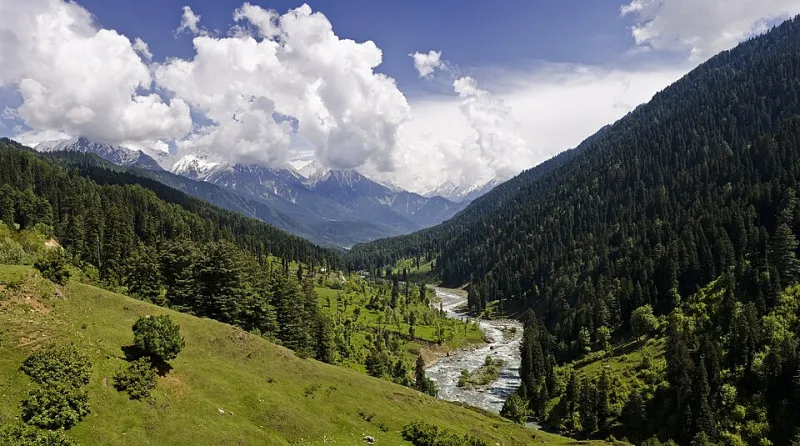
Photo: KennyOMG, CC BY-SA 3.0, via Wikimedia Commons
In the early hours of a morning in the Sikkim highlands, before the mist lifts from the Teesta River valley, a Lepcha elder might describe the quality of that particular light—the way it filters through the cardamom groves and rests on the mountain slopes—with a single word. That word, carrying layers of ecological observation, emotional resonance, and ancestral memory, would require several English sentences to even approximate. And even then, something essential would remain out of reach.
This is the central challenge—and the central fascination—of studying the Lepcha language. Known to its speakers as Róng ring, the language of the Lepcha people of the Sikkim-Darjeeling region encodes a relationship with the natural world so granular and so intimate that linguists argue it constitutes a distinct cognitive framework. As scholars at American universities begin to engage more seriously with endangered language documentation, Lepcha is emerging as one of the most instructive case studies in what is sometimes called the linguistics of ecological knowledge.
More Than Words: The Architecture of Meaning
Language is never merely a naming system. When a community develops vocabulary over centuries of living in a specific landscape, those words become containers for accumulated observation, ethical orientation, and social practice. The Lepcha language, spoken by a people who have inhabited the eastern Himalayas for millennia, is a particularly vivid example of this principle.
Consider the concept linguists have transliterated as something close to aathing—a term that describes the reciprocal obligation between a person and the forest that has sustained their family across generations. It is not quite gratitude, not quite debt, and not quite kinship, though it carries traces of all three. It implies an active, ongoing relationship rather than a historical fact. English has no single word for this. Phrases like "ecological stewardship" or "environmental responsibility" gesture toward it but strip away the personal, almost familial quality that aathing contains.
Or consider terms that describe specific seasonal transitions in the Himalayan ecosystem—words that encode not just the time of year but the precise behavioral changes in plants, animals, and water sources that accompany that transition. For a Lepcha farmer or healer, these words are not poetic flourishes. They are functional, carrying practical information about when to plant, when to harvest, when to expect certain medicinal plants to reach their peak potency.
What Linguistic Anthropologists Are Finding
The field of ethnolinguistics—the study of the relationship between language and culture—has long recognized that vocabulary shapes perception. The Sapir-Whorf hypothesis, in its more nuanced modern iterations, suggests that the categories a language provides influence what its speakers habitually notice and how they organize experience. Lepcha offers researchers a compelling laboratory for this idea.
Dr. Tashi Bhutia, a researcher affiliated with a Himalayan studies institute in Gangtok, has spent years documenting Lepcha vocabulary with particular attention to terms that have no cross-linguistic equivalents. His work, which has drawn interest from linguists at universities including the University of California and Cornell, suggests that Lepcha speakers possess a vocabulary for ecological states—the health of a watershed, the social behavior of animal populations, the quality of soil at different elevations—that has no parallel in Indo-European languages.
"When we lose a word," Bhutia has noted in presentations to international linguistic bodies, "we do not simply lose a label. We lose the question the word was designed to answer. And sometimes that question was one that took generations to formulate."
For American researchers working on biodiversity, climate science, or environmental ethics, this framing has practical implications. Indigenous vocabularies are increasingly understood not as curiosities but as repositories of long-term ecological observation—data, in a sense, that no modern instrument has yet replicated.
The Cognitive Dimension
Beyond ecology, Lepcha's untranslatable terms also illuminate something about the architecture of community. Several words describe social configurations and relational states that Western sociological vocabulary handles only clumsily. There are terms for the specific quality of silence shared between two people who have weathered a collective loss—a silence that is active, communicative, and healing rather than merely the absence of speech. There are words for the particular form of pride a community takes in a member's achievement when that achievement reflects back on the group's shared values.
These are not simply emotional nuances. They reflect a social ontology—a way of understanding what a person fundamentally is—that differs from the individualist frameworks dominant in American culture. In the Lepcha worldview, selfhood is constituted relationally; one is always already embedded in webs of obligation and reciprocity that extend to the non-human world. The language encodes this not as philosophy but as grammar.
Cognitive scientists at institutions like MIT and Stanford have in recent years argued that studying such languages can expand our understanding of the range of human cognitive possibility. The mind, these researchers suggest, is more plastic and more culturally shaped than earlier models allowed. Languages like Lepcha are evidence of cognitive architectures that dominant global languages have not developed.
The Stakes of Silence
The Lepcha language is classified as endangered. UNESCO's Atlas of the World's Languages in Danger places it in a category of serious concern, and demographic pressures—urbanization, the dominance of Hindi, Nepali, and English in formal education—have accelerated the decline in fluent speakers over recent decades. For younger Lepcha people navigating educational and economic systems that operate in other languages, the incentive to maintain active fluency in Róng ring competes with immediate practical pressures.
For American audiences accustomed to thinking about endangered species as the primary metric of ecological loss, the parallel concept of endangered languages requires a shift in perspective. When a language disappears, the knowledge it carries does not automatically transfer into surviving languages. Much of it simply ceases to be expressible—and therefore, in a meaningful sense, ceases to be thinkable in organized, transmissible form.
Organizations working on Lepcha language revitalization, including community groups in Sikkim and diaspora communities in cities like New York and San Francisco, have begun developing digital archives, educational curricula, and recorded oral histories. These efforts represent a race against time that is also, at its core, a race against forgetting.
A Different Kind of Fluency
For those of us who will never speak Lepcha, there is still something to be learned from encountering its untranslatable terms. They function as prompts—invitations to ask whether our own language has blinded us to certain realities, whether the concepts we lack words for are concepts we have simply failed to develop or concepts we have actively suppressed in favor of other values.
The Lepcha language, rooted in one of the most biodiverse and climatically significant regions on Earth, carries within it a model of human existence that is simultaneously ancient and urgently relevant. Its untranslatable words are not merely linguistic artifacts. They are, in the truest sense, voices from the roof of the world—and they are asking questions that the rest of the world is only beginning to know how to hear.