The Sickle That Stayed: Lepcha Repair Culture and the Case Against Replacement

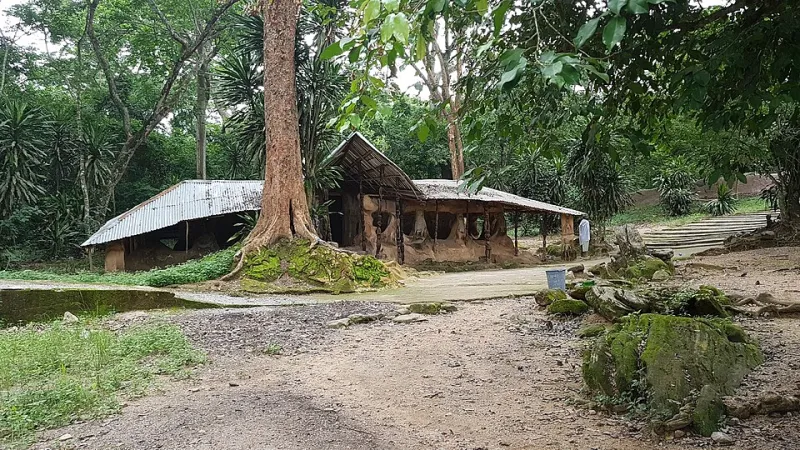
Photo: Himalayan craftsman repairing traditional sickle bamboo tools Lepcha, via birdybirdybirdy.com
A sickle in a Lepcha village may have a blade older than its handle and a handle older than the person using it. The blade has been ground back, the handle replaced, the joint tightened. None of this is remarkable. It is simply what one does with a tool that is expected to stay. In the United States, the same object would likely have been discarded at the first sign of wear, replaced by a cheaper model, and forgotten in a garage or a landfill.
A Tool With a Biography
Lepcha craft traditions in the Eastern Himalaya include a wide range of everyday tools: bamboo winnowing trays, wooden grain pounders, weaving shuttles, digging sticks, and heavy chopping knives. The details vary by household and locality, but the pattern is consistent. A tool is not treated as a product with a warranty. It is treated as a relationship with a maintenance calendar.
A bamboo tray may be re-rimmed. A wooden handle may be re-fitted after the original splits. A loom shuttle may be smoothed and oiled rather than retired. The repair is often invisible to an outsider, which is precisely the point. The tool's history is stored in its joints, patched surfaces, and slight asymmetries. It has a biography, not just a price.
Repair as Curriculum
In a consumer economy, repair is often a chore or a last resort. In a Lepcha craft context, it can be a curriculum. A young person learning to repair a tool is also learning about material properties, seasonal timing, and diagnosis. Why did the handle split? Was the wood too green? Was the joint too tight? What does the grain suggest? These are practical questions, but they are also scientific ones.
Repair teaches patience because it rarely goes according to plan. It teaches attention because a small crack can become a large failure. It teaches humility because the material has its own logic. A culture that repairs is a culture that expects to be surprised by the physical world and to respond with skill rather than with a credit card.
This knowledge is not automatically preserved. It can be lost when older craftspeople die, when young people migrate to cities, or when cheap replacements make repair seem pointless. The disappearance of repair knowledge is quieter than the disappearance of a language, but it is part of the same thinning of local competence.
The Economics of Keeping
The case for repair is not only sentimental. Replacement has hidden costs. Every new object requires extraction, manufacturing, shipping, and eventually disposal. The environmental ledger includes mining, energy use, water, and landfill burden. The social ledger includes labor conditions and the concentration of repair knowledge in fewer and fewer hands.
In the United States, the right-to-repair movement has made these costs more visible. Farmers have fought for the ability to fix their own equipment. Consumers have pushed back against devices that cannot be opened. Repair cafés have appeared in libraries and community centers. State legislatures have considered bills that would require manufacturers to provide parts, tools, and documentation. These are important fights.
But a legal right to repair is not the same as a living culture of repair. A law can require that a part be available. It cannot by itself create the know-how, the workshop, or the habit. Lepcha toolmaking suggests that repair survives when it is embedded in everyday life, not only in policy.
What the Right-to-Repair Movement Can Learn
The American right-to-repair debate often focuses on access: access to parts, access to manuals, access to software diagnostics. All of that matters. But access without competence is a shelf of unopened manuals. A repair culture also needs teachers, time, and places to practice.
Lepcha households do not treat maintenance as a specialized profession. It is distributed across ordinary life. That distribution is a strength. It means that many people can recognize a problem and attempt a fix. It also means that knowledge is shared rather than hoarded.
For American communities, the lesson is not to imitate Himalayan material conditions. It is to recover the social habit of maintenance. Tool libraries, repair workshops, school programs, and intergenerational mentoring can all help. So can design that makes repair possible in the first place.
The Limits of Nostalgia
There is a temptation to romanticize repair. In reality, repair can be a burden. It can fall disproportionately on women, on poor households, and on people without access to safe tools. Scarcity is not a virtue. The goal is not to return to a hard past. The goal is to recover the competence that makes choice possible.
A Lepcha craftsman repairing a sickle is not making a statement about consumerism. He is keeping a tool in use. But that ordinary act carries a larger argument: objects can have second, third, and fourth lives. The repair that outlives the object is not only about the object. It is about a way of knowing the world well enough to keep it working.