A Forest With Rules, Not a Fence: Lepcha Sacred Groves and the Future of Conservation
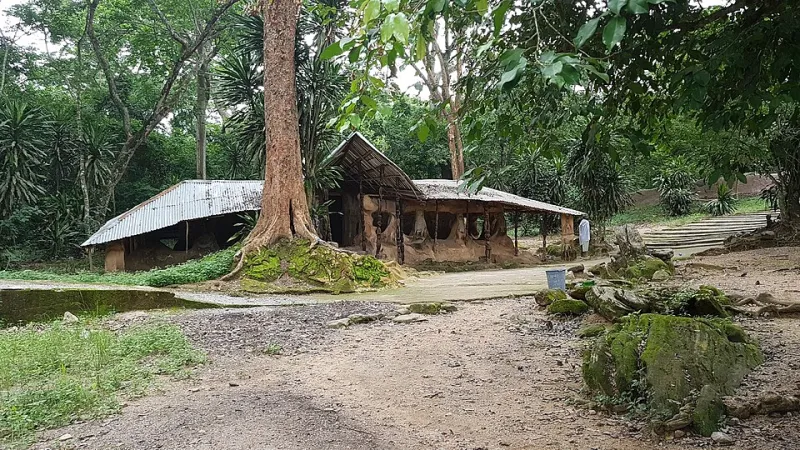
Photo: Tosin Odunfa, CC BY-SA 4.0, via Wikimedia Commons
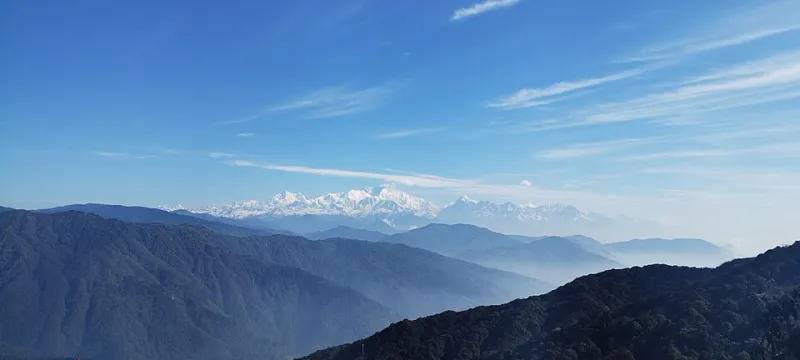
In the Eastern Himalaya, a forest can have a reputation. In parts of Dzongu, Kalimpong, and western Sikkim, certain groves are known to Lepcha communities not primarily as timber stands or scenic backdrops but as neighbors with rules. English often calls them sacred groves. The label is useful but thin. What matters is the system of obligations that surrounds them: which trees may be cut, which days are closed, who may enter, what may be carried out, and what must be left alone. These are not fences on a map. They are rules held in memory and repeated in ritual life.
The Grove as Neighbor
A sacred grove is not necessarily untouched. That is one of the first misconceptions a visitor brings from the American conservation tradition. In the United States, protection is often imagined as exclusion: build a boundary, post a sign, require a permit, keep people out. Many Himalayan groves work differently. They may allow selective use, seasonal access, or ritual harvesting. What they do not allow is the assumption that the forest is available to anyone for anything.
The grove is treated as a presence with standing. Its rules are not only legal; they are cosmological and social. A family may avoid cutting a particular species because of a story attached to it. A community may close a path during a ritual period. An elder may know that a certain slope is vulnerable and that the knowledge is not to be shared casually. This is conservation by relationship rather than conservation by perimeter.
What Taboo Does That a Permit Cannot
In American public-lands debates, governance usually runs through agencies, permits, environmental review, and enforcement. These tools matter. They have protected landscapes that would otherwise have been mined, logged, or subdivided. But they depend on a state apparatus and on the willingness of users to comply. A permit is only as strong as the inspection behind it.
Sacred groves rely on a different kind of enforcement. Taboo, ritual obligation, reputation, and local memory do work that a signboard cannot. This is not superstition in the dismissive sense. It is a social technology. It distributes responsibility across a community rather than concentrating it in a ranger station. When a grove is treated as a neighbor, violation is not merely illegal. It is a breach of relationship.
That does not make sacred groves automatically effective. They can be small, fragmented, and vulnerable to outmigration, language shift, tourism pressure, and climate change. A taboo can erode when the stories that carry it stop being told. The point is not that ritual replaces law. The point is that law without local memory is often brittle.
The Difference Between Exclusion and Obligation
The American wilderness ideal has taught generations that nature is most protected when people are absent. That idea has real power, and it has preserved places that might otherwise have been lost. But it also creates a paradox: the same culture that treasures wilderness often struggles to describe how people belong to it.
Lepcha sacred groves suggest another grammar. Humans are not outside the forest, and they are not simply visitors. They are participants under obligation. The forest has rules because the relationship has rules. This is a meaningful difference. A fence can keep people out. A rule can keep a relationship alive.
What the American Public-Lands Debate Misses
In the United States, arguments over national parks, Bureau of Land Management acreage, tribal co-management, and wilderness designation often turn on ownership and access. These are important questions. But they can crowd out a prior question: what does stewardship actually require of the people who live near a place?
Sacred groves do not offer a simple policy template. They are embedded in specific histories, languages, and ritual systems. They cannot be copied like a zoning ordinance. But they do challenge the assumption that conservation must always look like a boundary enforced from outside. They suggest that local institutions can be infrastructure, not obstacles.
Memory as Infrastructure
The most important infrastructure in a sacred grove may be invisible. It is the memory of where the boundary lies, why a particular tree is spared, which season requires restraint, and who has the authority to decide. This memory is not automatically democratic or equitable. It can be contested. But it is alive in a way that a management plan often is not.
For American conservation, the lesson is not to romanticize Himalayan communities or to pretend that local knowledge is always right. The lesson is that durable conservation usually requires more than a rule imposed from a distance. It requires people who know the place well enough to notice change and who have a reason to care.
A grove with a memory is not a museum. It is a working relationship. That may be the most useful thing it has to say to a country still arguing over where the fence should go.