One Crop, Many Risks: Large Cardamom and the Fragile Bargain of the Eastern Himalaya
Photo: rovingI, CC BY 2.0, via Wikimedia Commons
In the United States, large cardamom usually arrives without a story. It is the smoky, camphor-like note in some chai blends, certain South Asian savory dishes, and specialty spice mixes. It is a different species from the small green cardamom that many American cooks know, and it is rarely sold under a name that tells the buyer where it came from. The label may say black cardamom. The jar may say only cardamom.
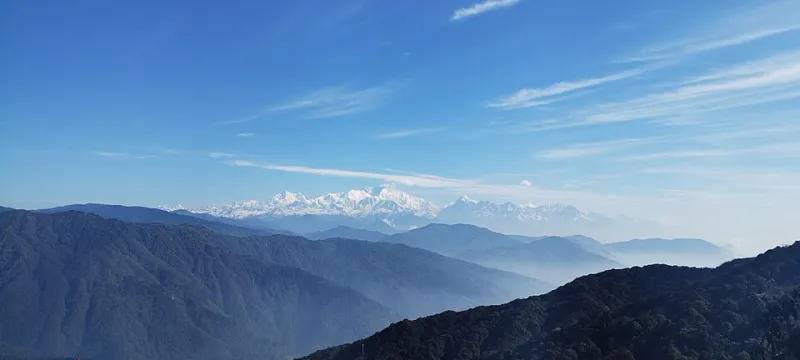
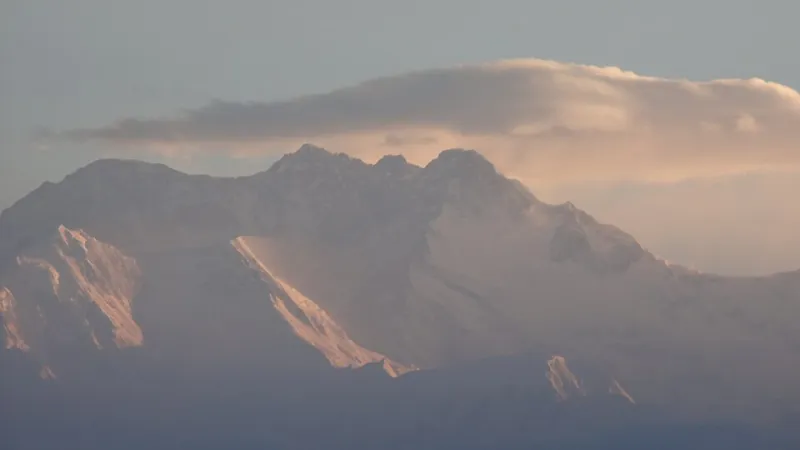
On the shaded slopes of Sikkim, the Darjeeling hills, eastern Nepal, and Bhutan, the story is more specific. Large cardamom, Amomum subulatum, is a perennial crop that grows under tree cover. For many Lepcha households and other Himalayan farming communities, it became a source of cash in a landscape where cash was scarce. It fit the slope. It did not require clearing a field every year. It could be dried and stored. It could be sold.
That fit was real, and so was the risk.
The crop that changed the slope
Large cardamom is often grown beneath alder trees and other shade species, which makes it look less like a plantation and more like a managed forest. The crop produces capsules that are harvested, dried, and sold as spice. In the eastern Himalaya, it became one of the few agricultural products that could connect a remote household to a national and international market.
For Lepcha farmers, the crop was not simply introduced from outside and imposed on a blank landscape. It became part of a mixed system that already included grain, vegetables, livestock, and forest use. But over time, in some areas, cardamom moved from being one component of that system to being the component that paid school fees, medical bills, and house repairs. That is when a useful crop becomes a bet.
A bet with three vulnerabilities
The first vulnerability is disease. Large cardamom is susceptible to viral diseases known locally as chirke and foorkey, which can spread through planting material and insect vectors. Once a field is affected, productivity can fall sharply. Replanting is expensive, and clean suckers are not always available. A farmer who has invested years in a cardamom patch may face a choice between waiting, replanting, or abandoning the crop.
The second is price. Large cardamom prices can swing widely from season to season. Demand in South Asian markets is strong, but it is not infinite. Buyers can shift origins, quality standards can tighten, and border disruptions can delay shipments. A household that depends on one harvest for most of its annual income is exposed to every one of those shifts.
The third is climate. Erratic rainfall, warmer winters, landslides, and changing pest pressure all affect a crop that needs stable shade and moisture. When a road washes out, the problem is not only physical. The trader cannot reach the village. The dried capsules cannot leave. The price offered at the farm gate may fall because the buyer knows the farmer has no alternative.
From slope to spice rack
The supply chain that connects a Lepcha farm to an American kitchen is long and mostly opaque. Most smallholders sell dried capsules to local traders, who sell to larger aggregators, who sell to exporters or processors. Quality is judged by appearance, aroma, moisture, and cleanliness. Traceability is thin. A US importer may know the country of origin but not the district, the village, or the farmer.
That distance matters because risk is unevenly distributed. The American buyer wants consistency and food safety. The exporter wants volume and predictable quality. The trader wants a margin. The farmer carries the biological risk, the weather risk, and much of the price risk. When a disease outbreak hits, the farmer absorbs it first.
A more resilient supply chain would not be built on sentiment. It would be built on a few practical commitments. Buyers could pay for quality and traceability rather than treating cardamom as an anonymous commodity. Cooperatives could invest in clean planting material and shared drying facilities. Research institutions could work on disease management that smallholders can actually afford. Local governments could support crop insurance and price information. And farmers could treat large cardamom as part of a portfolio rather than a single lifeline.
What resilience would actually require
Diversification is often described as if it were a simple matter of planting something else. In the eastern Himalaya, it is not simple. The slope is steep. The market for alternative crops may be thin. A farmer who has spent a decade learning cardamom may not want to abandon it. The goal should not be to replace the crop but to reduce the cost of failure.
That means better nursery systems, so a disease outbreak does not wipe out a household's planting stock. It means extension services that reach women and smallholders, not only the largest farmers. It means storage and processing that allow farmers to wait for a better price instead of selling immediately after harvest. It means contracts that share risk instead of pushing it downhill.
In 2026, some American spice buyers are paying more attention to origin than they did a decade ago. That attention is useful, but it is not enough. A label that names a region does not by itself change the bargain at the farm gate. The question is whether the buyer is willing to pay for the conditions that make the supply reliable: healthy plants, trained farmers, functioning cooperatives, and a price that covers the cost of replanting after a bad year.
The large cardamom story is not a parable about simplicity. It is a story about a crop that made sense in a difficult place and then became difficult in its own right. The spice in the chai is the end of a long chain. The chain holds only if the slope holds.